AMAZAKE | ALCOHOLIC & NONALCOHOLIC

Amazake is a traditional, super healthy drink served either chilled or warm. Ama means sweet and zake is sake, but there is an alcoholic and non alcoholic version to it. The non alcoholic one is made out of rice koji (fermented rice) while the alcoholic one is made from left sake production called sake lees. It’s traditionally consumed on New Years or during the Hinamatsuri (Doll Festival). Amazake has a thick white, creamy consistency to it. When the rice ferments it breaks down the carbs into simple sugars giving it a natural sweetness to it. Amazake is also considered to be the natural IV drip because of how healthy it is for you! Hungover? Drink some amazake to re-hydrate you! Try some on our Tokyo Food Tour.

Photo Credit: Media Magical Trip

Photo Credit: Just One Cookbook

BEER (ASAHI/KIRIN) | ALCOHOLIC

Whether it be at home, the bar, the izakaya or at karaoke, beer is Japan’s number one choice in alcohol. Currently, four companies dominate the beer industry - Asahi, Kirin, Suntory and Sapporo. Asahi and Kirin have been known to be long time rivals. During the late showa era (1926-1989), Kirin was Japan’s number one brewer with over 60 percent of the market control. But, in the late 80s, Asahi came out with the Super Dry and took over Kirins lager as the number one beer. While you're in Japan, try different beer brands and see which one you like the best!  

Photo Credit: Media Magical Trip

Photo Credit: Media Magical Trip

CALPIS | NONALCOHOLIC

One of the most popular non carbonated soft drinks in Japan, Calpis has been serving Japan since 1919. This milky based soft drink is a favorite drink, particularly among kids. It has a light, milky taste to it - almost like a vanilla yogurt, yakult flavoring to it. You can get regular calpis, flavored calpis and even calpis soda - the carbonated version of it. Try calpis practically anywhere in Japan - vending machines, convenience stores, restaurants and drinking establishments. 

Fun fact: Calpis is made from two words. Cal from the word calcium and pis from the sanskrit word of salpis - one of the five tastes described in Buddhism. However, it’s sold as Calpico overseas because calpis sounds a lot like cow p**s in english. In Japanese it’s pronounced as karu-pisu

Photo Credit: Tsunagu Japan

Photo Credit: Tsunagu Japan

CANNED BOSS COFFEE | NONALCOHOLIC

If you’re a coffee lover, then trying new coffees in different countries is a must. In Japan, some of the most popular coffees are not in cafes but in a can. You might be skeptical at first, but Suntory’s canned BOSS coffee is practically in every single vending machine in Japan due to its popularity. The vending machines have both hot and cold options for their canned coffee. 

Canned coffee started in Japan in the 1950s when convenience stores and vending machines became popular. It naturally spread to the rest of the world and grew in massive popularity in Asia. While there are many brands of canned coffee and we recommend trying various brands, BOSS coffee is by far the most popular choice in Japan.

Photo Credit: Just One Cookbook

Photo Credit: Live Japan

COFFEE JELLY | SWEET

If you're a huge coffee person, trying a cup of coffee jelly in Japan is a must. It’s a refreshing dessert made from black coffee, gelatin powder and sugar. It’s then topped off with whipped creme and sometimes ice cream. You can get a cup of coffee at any cafes or convenience stores in Japan!

Photo Credit: Marion Crepes Trip Advisor

Photo Credit: Just One Cookbook

CREPE | SWEET

While crepes are invented in France and are well known worldwide, Japan has put it’s own spin on the crepe - as they do with anything! One of the most popular places to get Japanese style crepes is on Takeshita Street in Harajuku. Instead of eating crepes on a plate with a fork and knife, you can find crepes wrapped in paper and carried around like ice cream cones. It’s usually made up of a generous amount of whipped cream, cut fruits and a variety of sauces. The stores in Harajuku literally have over 100 different varieties of crepes which include interesting ones such as strawberry cheesecake and chocolate cake crepes. So, if you have a sweet tooth, then head on over to Takeshita Street to fulfill your sweet dreams.

CUP NOODLES | SAVORY

Everyone has heard or even tried cup noodles before. These delicious cups are filled with a variety of different soup noodles that are easy to carry around and takes only 3 minutes to make! The Cup Noodle started thanks to the invention of the instant ramen packages. The instant ramen package was created in 1958 by the founder of Nissin Food Company, Momofuku Ando. Then 13 years later, by the same person and company, The Cup Noodles were invented. Today, Cup Noodles has reached almost every corner of the world and has been created by many other companies. While you're in Japan, maybe you can try or even take home some interesting Cup Noodle flavors from Japan! Some of our favorite flavors from Japan are the miso and tonkotsu Cup Noodles.

Photo Credit: Wikipedia

Photo Credit: Serious Eats

DAIFUKU MOCHI | SWEET

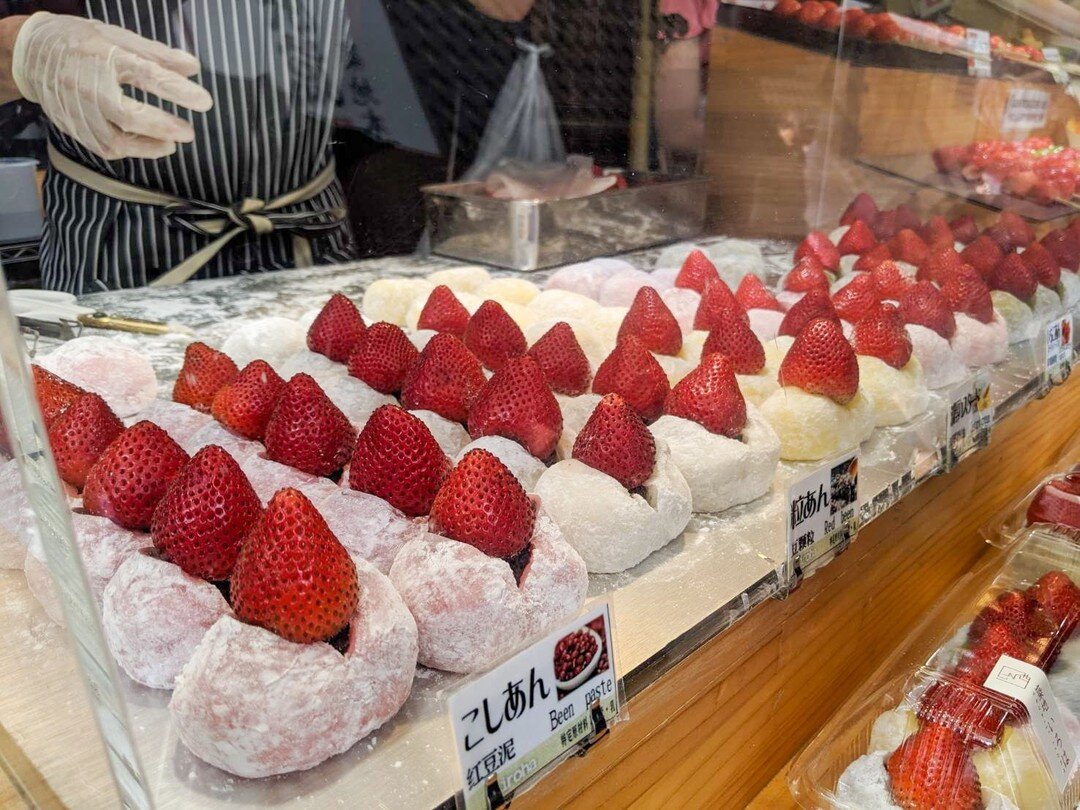
Daifuku Mochi is a very popular Japanese confection among both Japanese people and foreigners. It’s a small ball of mochi made from rice (or rice flour), water and sugar with some kind of a sweet filling. Usually it’s a red bean filling, but lately there have been creative fillings such as ice cream, whipped cream and even strawberries. These small delights are so delicious and a must eat in Japan!

Photo Credit: Japan Centre

Photo Credit: Wikipedia

DANGO | SWEET

Dango is a Japanese dumpling mochi. Typically they are skewered, but still have non skewered types as well. They are usually accompanied by some green tea for a nice dango set. Of the many different types of dango, one of the most common skewered dango is the mitarashi dango. About 3-5 dangos are lined up on a skewer and grilled for a nice crisp on the outside with a nice warm chewy inside. After they are grilled, they are glazed with a thick layer of sweet soy sauce glaze. You can easily buy these at dango stands and convenience stores throughout Japan.

Photo Credit: Just One Cookbook

Photo Credit: Japan Centre

DASHI | SAVORY (UMAMI)

In 2019, Tokyo held the record for having the most Michelin stars in a city, clocking in at an extraordinary 230 restaurants holding one or more stars. In comparison, Paris came in second at 123 stars. Third was Kyoto and fourth was Osaka, two more Japanese cities. Japan has such a rich food culture it even invented (or discovered rather) the fifth flavor called umami. But, what makes Japan have such a rich food culture? It may lie in their use of dashi.

Dashi is a Japanese soup stock which forms the foundation of Japanese cooking. It’s a soup stock that’s used in a wide range of Japanese dishes like miso soup, noodles, takoyaki, okonomiyaki and more. The simple form of dashi is made by boiling kombu (Japanese kelp) and katsuobushi (dried bonito flakes) in water (they sell dashi in packs where you can use it like tea bags).

Dashi was actually the main reason the fifth flavor of umami was discovered. In the early 20th century, Chemistry Professor Kikunae Ikeda came home from a long days work and was sipping on soup that had dashi in it. As he was tasting this he wondered, “Why is it so good? What am I tasting?”. It wasn’t salty, sweet, bitter or sour, it was “pleasant”. He went on to call this umami (umami is derived from the word umai which means delicious).To best describe the taste of umami , it’s a pleasant, savory taste. But, dashi isn’t the only food that has umami in it. Cheese, nuts, tomatoes, eggs, fish, meats, and even human breast milk have umami in it. But what ties all these different foods together? Professor Ikeda discovered that it had something to do with the chemical compound of these foods.

Foods that are high in glutamates have a lot of umami in it. Our taste receptors respond to glutamates separately from the other four flavors. Kombu and katsuobushi, the two main ingredients of dashi is very high in glutamates which is why it has a lot of umami in it.

food-tour-japan-dashi.jpg