



KITKATS

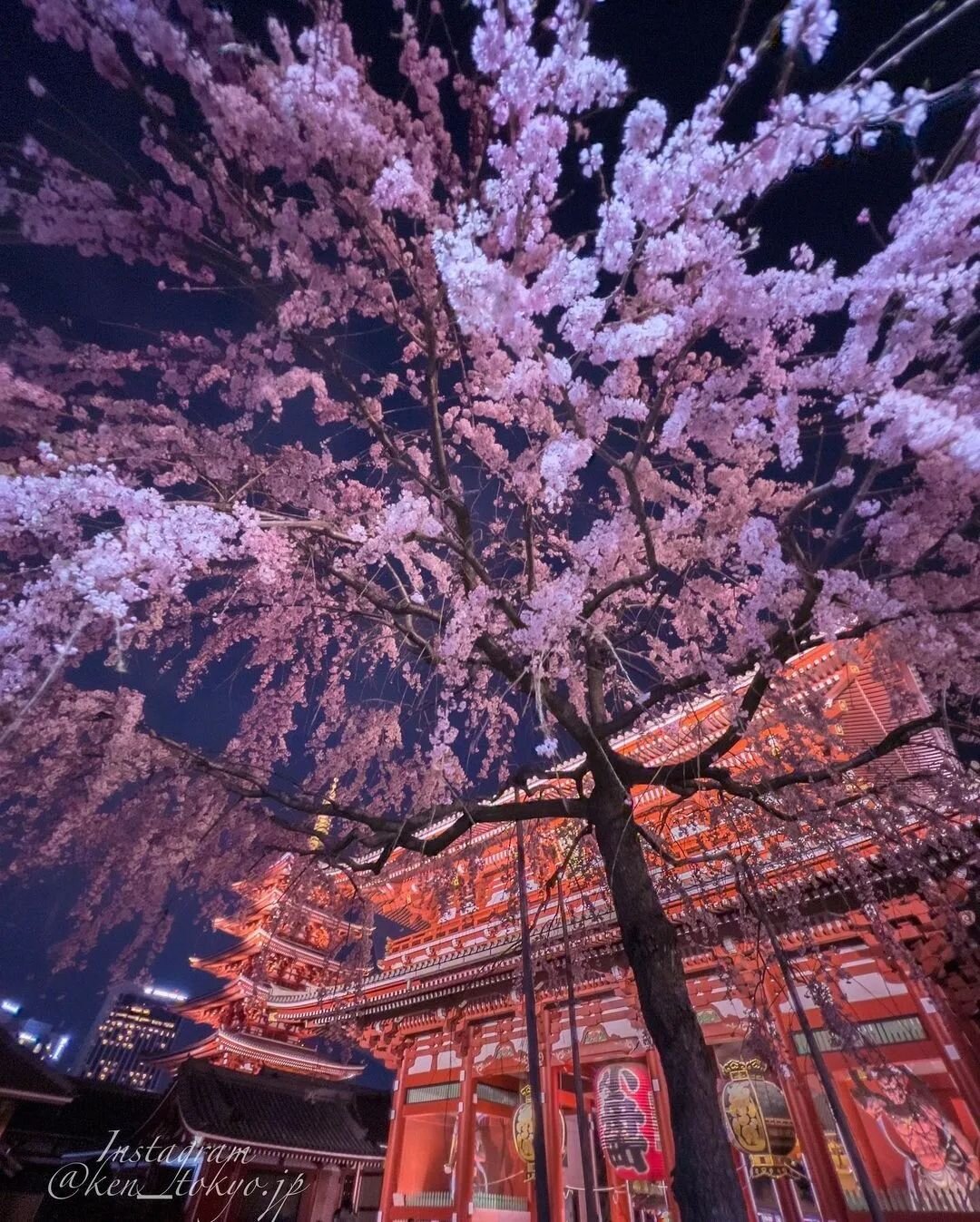
Kit Kat is one of the most popular chocolate brands in Japan for several reasons. In Japanese, Kit Kat is pronounced Kitto Katsu which is an expression of good luck in Japan or literally “you will win”. It is often given to school children before a test as a good luck treat. Aside from this clever word play, Kit Kat also has over a hundred different flavors in Japan with some bizarre ones like wasabi, sake and pumpkin pudding to name a few! You can buy Kit Kat almost anywhere in Japan. Of course, you will come across the basic ones in supermarkets, but you can find far more varieties in Don Quijotes, select Bic Cameras and the Kit Kat Chocolatory stores for high-end expensive Kit Kats.

Photo credit: Ozu Washi website

Photo credit: Time Out website

Where to buy:

Address for Kit Kat Chocolatory in Ginza: Oak Ginza Bldg.,3-7-2 Ginza, Chuo-ku Tokyo

or

Any Don Quijote Stores

Tel:

Ginza store: 03-6228-6285

Website:

https://nestle.jp/brand/kit/chocolatory/

https://www.donki.com/en/

Hours:

Kit Kat Chocolatory Ginza: 11:00am - 9:00pm
JAPANESE PAPER (WASHI)

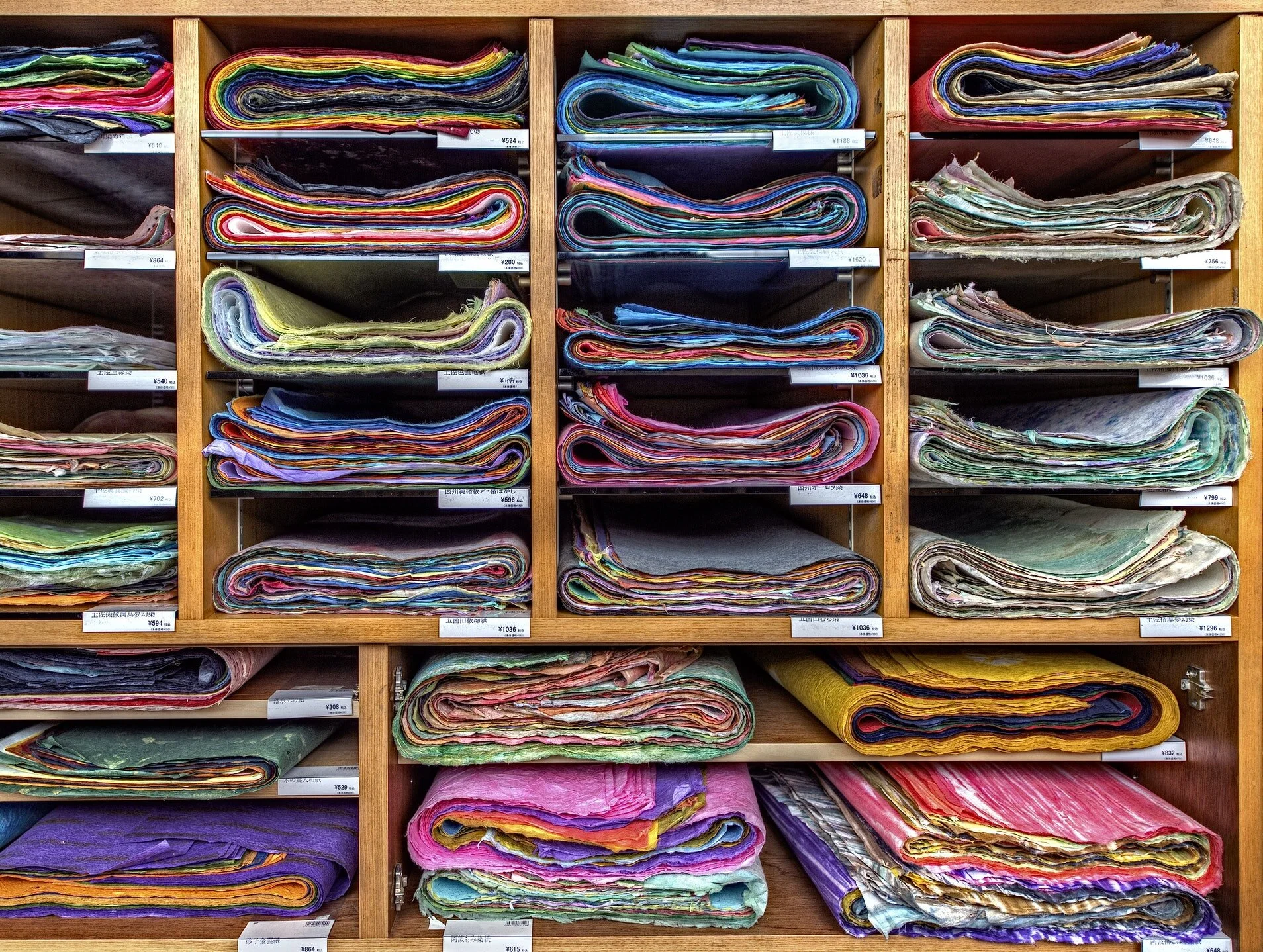
Ozu Washi has been serving Nihonbashi with their traditional Japanese paper since 1653. They sell a variety of different paper for decoration, gift wrappings, origami and different types of Japanese arts and crafts. Their top notch, high quality paper will make you realize why they have been around since 1653.

Photo credit: Jon Sheer

Photo credit: Jon Sheer

Where to buy: OzuHonkan Bldg., 3-6-2 Nihombashihoncho, Chuo-ku, Tokyo Japan

103-0023

Tel: +81 (0)3-3662-1184

Website: https://www.ozuwashi.net/en/

Hours: Closed Sundays, 10:00am - 6:00pm

SAKE LEES FACE MASK BY WAFOOD MADE

Since ancient times, it was said that the sake production masters would have the most beautiful hands, thus sake for the skin was said to be beneficial. A recent boom in skincare has been taken over by sake products. Wafood made has a line of various sake cosmetic products such as face wash, lotion, cream and face masks all made from sake lees. Sake lees are the left overs from sake production and is said to wash away dullness to reveal smooth, moist skin. This face pack contains original sake extract from the Kawazu Sake Brewery in Kumamoto Prefecture. This unique face mask will help moisturize your skin and keep it silky smooth!

Photo credit: Don Quijote website

Photo credit: Don Quijote website

Where to buy: Any drugstores in Japan or Don Quijote Stores in Japan

Tel: N/A

Website: Don Quijote website

Hours: N/A

TOWELS BY IMABARI

These superb quality towels has been leading the towel industry for over 120 years in Japan. The softness and ability to absorb water well has put its name in the books around the world and has also appeared in many exhibitions. The towels are produced in Imabari, Ehime Prefecture where they use the natural soft water nearby which is gentle to the yarn of the towel. Each towel goes through a 5 second test where if after 5 seconds, the towel sinks, then it passes.

tokyo-souvenirs-imabari-towels.jpg

Where to buy: 2F 203, 5-3-10, Minami-aoyama, minato-ku, Tokyo

〒 107-0062

Tel: +81-3-6427-2941

Website: https://www.imabaritowel.jp/en

Hours: Closed every 2nd Tuesday of the month, 11:00am - 7:30pm

Video Credits: Youtube

CHOPSTICKS

From couple hundred yen (couple dollars) chopsticks to tens of thousands of yen (couple hundred dollars) chopsticks, Hashicho has a wide variety of chopsticks to choose from. They also range in tiny sizes made for children and large fat sticks for the hands of a sumo wrestler. Aside from chopsticks, they also sell unique chopstick stands, rice bowls and other lacquer ware!

Photo credit: Hashicho website

Photo credit: Hashicho website

Where to buy: Nihonbashi-Muromachi 1-5-5 Chuo-Ku Tokyo Coredo-Muromachi 3, 2F

〒103-0022

Tel: 03-3277-6033

Website: https://www.imabaritowel.jp/en

Hours: 10:00am - 9:00pm

KNIVES BY KIYA

Kiya knives has been serving Tokyo for over 200 years establishing in 1792. They have combined tradition with modern technology to make some of the best knives for cooking. They have over hundreds of knives which include knives for cutting meat, fish, vegetables, boning, frozen foods, slicing, carving and a whole lot more. Not only do their ways cover their knife products but their kitchen tools and other modern products as well. Check out their store in Nihonbashi.

Photo credit: Mitsui Shopping Park

Photo credit: Mitsui Shopping Park

Where to buy: Nihonbashi-Muromachi 2-2-1 Chuo-Ku Tokyo Coredo-Muromachi. 1F

〒103-0022

Tel: 03-3241-0110

Website: http://www.kiya-hamono.co.jp/english/index.html

Hours: Open everyday, 10:00am - 8:00pm

FRUITS SANDWICH RECIPE

A beloved snack in Japan, the fruits sandwich consists of a milky white bread with the ears cut off with whip cream and your choice of fruit (typically strawberries) in between for a sweet-delicious sandwich.

They are sold anywhere in Japan, ranging from cheap convenience store sandwiches to high end, high quality sandwiches costing over 1500 Yen (about 14 USD). We also visit a fruits sandwich shop at Tokyo Station on our Tokyo food tour.

If you have a sudden craving for a fruits sandwich, check out the recipe below by Just One Cookbook.

Video credit to Just One Cookbook

INGREDIENTS

  • 12 strawberries

  • 2 kiwis

  • 1 navel orange

  • 4 slices of shokupan (Japanese milky white bread or any kind of bread of your choice if unavailable)

    Whipped Cream

  • 1 cup heavy (whipping) cream 240 ml

  • 5 tsp sugar (or ten percent of heavy whipping cream)

  • 1 tsp rum (optional)

Procedure

  • Remove core of straberries

  • Cut off both ends and peel kiwi

  • Cut off both ends and peel orange

  • Cut off segment wall and separate oranges into each segment

  • Pat down fruits with paper towel

    Whipped cream

  • Prepare a large bowl of iced water and place a medium bowl inside the larger bowl to keep cool. Make sure the bowl is clean and dry. Add the heavy whipping cream and start whisking on low speed.

  • Once bubbly, add sugar and rum (if you are using) and start whisking on medium-high speed.

  • The cream will be thicker as you whip.

  • When you lift the whisk out of the cream and shows peaks, remove the bowl from the ice bath and switch to a hand whisk. Whisk until you achieve the right consistency. Check the consistency of the whipped cream as you whisk. It should be spreadable but not runny because it goes between the sandwich bread.

  • Now spread the whipped cream on both sides of the sandwich bread.

  • Only on one side of the sandwich bread, align the fruits. I plan to cut the sandwich diagonally. Think carefully about how you want to show your cross section. I recommend taking a picture of the alignment of the fruits and don’t change the orientation of the sandwich.

  • Put the whipped cream to fill in any gap between fruits.

  • Put the second slices of sandwich bread over the fruits, facing the whipped cream side down.

  • Prepare plastic wrap, large enough to wrap the sandwich tightly from all four sides. 

  • Mark the cross section over the plastic wrap with a pen.

  • Put the sandwiches between plates and refrigerate for at least one hour (up to overnight). In Japan, putting weight on the sandwich is a pretty standard method prior to cutting in half.

  • Open the plastic wrap and cut the sandwich in half diagonally with a clean knife. Keep it closed (Don’t open the sandwich to show cross section yet). Clean the knife with a hot wet towel before each cut.

  • Cut off all the ears.

  • Then serve and enjoy!

Photo credit: Just One Cookbook

Photo credit: Just One Cookbook

Recipe and procedure credits to Just One Cookbook

#tokyofoodtour #greentea #matcha #japanesegreentea #japantour #tokyotour #instagood #getinmybelly #photooftheday #instacool #tokyo #hellotokyotours #ilovetokyo #hellotyo #streetsoftokyo #visittokyo #foodie #foodtour #preciousmemories #familytravel #thingstodointokyojapan #tokyoguide #kamiyabar #tokyofoodtour #thingstodointokyojapan #tokyofoodtour #hakonetravel #hakone #owakudani #volcano #mtfuji #blackeggs

HAKUZA TOUCH OF GOLD COSMETICS

Gold leaf has been a popular decoration for lacquerware since the 16th century but lately, it has been popular in cosmetic products as the gold leaf is said to be good for the skin. About 99 percent of all gold leaf products are made in Kanazawa Prefecture of Japan. One of the most popular brands is Touch Of Gold by Hakuza. Applying these products to the skin is said to raise the surface skin temperature which helps circulate blood and contributes to elasticity of the skin, thus reducing wrinkles and blemishes.

Photo credit: Hakuza website

Photo credit: Hakuza website

Where to buy: Nihonbashi-Muromachi 2-2-1 Chuo-Ku Tokyo Coredo-Muromachi. 1F

〒103-0022

Tel: 03-3273-8941

Website: https://www.hakuza.co.jp/shop/nihonbashi/

Hours: Open everyday, 10:00am - 8:00pm

DASHI BY YAGICHO

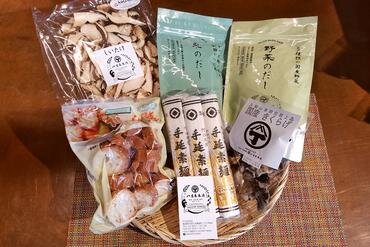
Dashi is an essential component of Japanese cooking that you will find in every single household in Japan. It is a broth made from three main ingredients: Katsuo (bonito), konbu (Japanese kelp), and shiitake. Dashi usually serves as the base for miso soup, soup noodles, Japanese omelettes and many other Japanese dishes. It forms a base for all Japanese cooking! If you are looking to up your Japanese cooking skills, then a bag of dashi from Yagicho is a must buy in Tokyo. They have been around the Nihonbashi area since 1737 and has been family owned since. They sell a variety of dashi, which some are great tasting on their own and others for cooking. They’re friendly English speaking staff can also help with your purchases of dashi or other Japanese cooking products as well. Dashi is usually sold in packs similar to tea bags where you can boil the bag of dashi in water to get your base.

Photo credit: Yagicho website

Photo credit: Yagicho website

Where to buy: 1-7-2 Nihonbashi Muromachi Chuo-ku, Tokyo

Tel: 03-3241-1211

Website: https://yagicho-honten.tokyo/?ls=en

Hours: Open everyday (except Jan 1st/2nd), 10:00am - 6:00pm

WOODEN COMBS BY YONOYA

This traditional box wood comb shop started out in modern day Bunkyo, Tokyo in 1717 and moved to it’s current spot in Asakusa in the early 1900s. Yonoya has passed down their comb making traditions throughout all these generations and have kept the same exact way of making it since they opened up 300 years ago. Originally made only for professional hairdressers to style women and mens hair, they now sell combs to regular people and is said to help improve your scalp and hair health. Get your own, traditionally wooden comb here.

Photo credit: Yonoya website

Photo credit: Yonoya website

Where to buy: 〒111-0032 1-37-10 Asakusa, Taito-ku, Tokyo

Tel: 03-3844-1755

Website: http://en.yonoya.com/

Hours: Closed every Wednesday (occasional Thursday), 10:30am-6:00pm