
AUGUST | EDOGAWA FIRWORKS

On the first Sunday of August, one of the biggest and top fireworks show goes off above the banks of Edogawa. With people wearing traditional yukatas and enjoying festival activities before the show nearby at Sensoji Temple, it’s one of the top summertime events. Over 14,000 fireworks will be launched in the span of 75 minutes features 8 different themes popping to the beat of music. To reserve seats you should get there early to make sure you have a seat. You can even participate in festival activities few hours before the show and enjoy your night.

Entrance fee: Depends on option
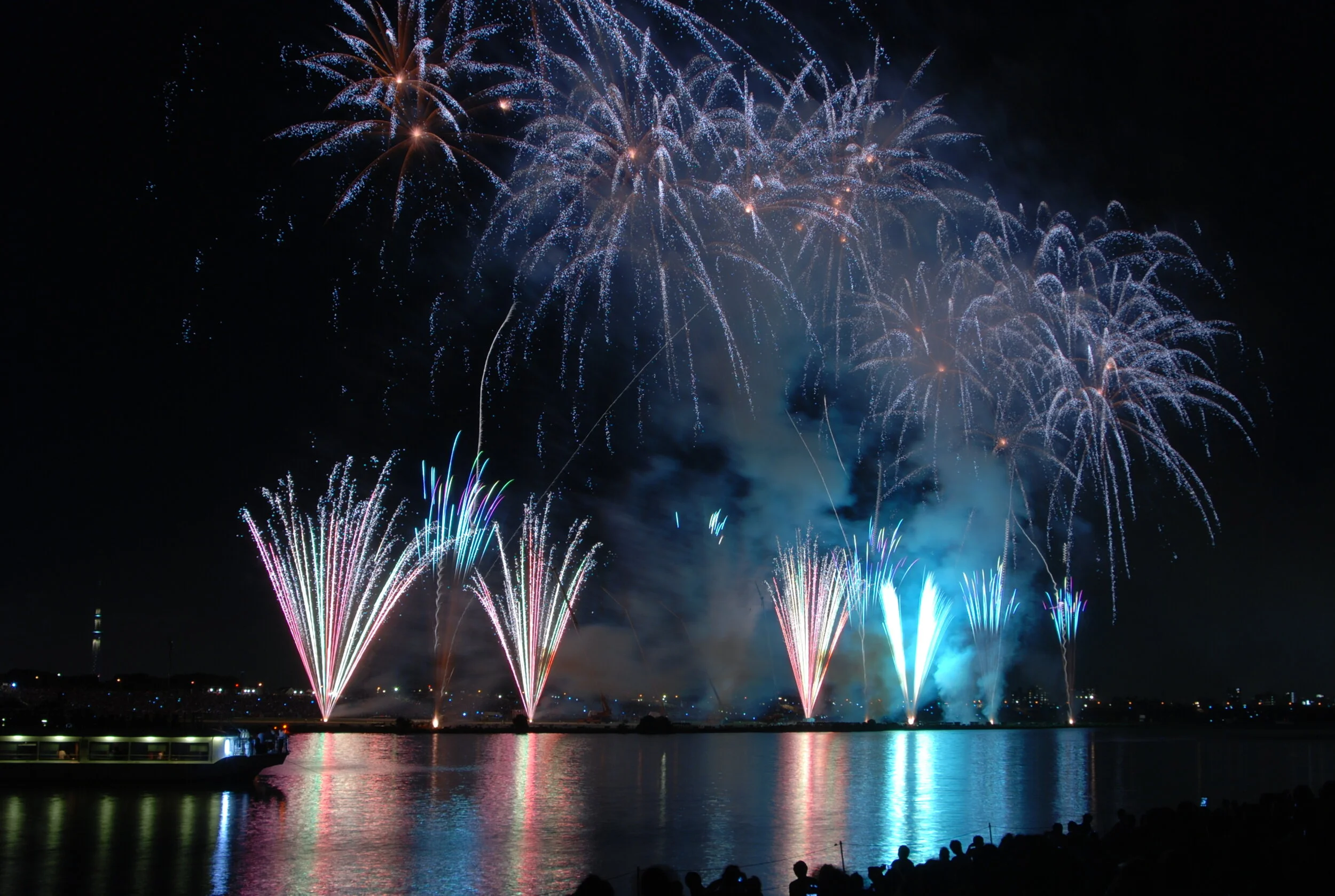
Photo credit: Tokyo Weekender

Photo credit: Timeout Tokyo

Location: River bank by Edo River next to Shinozaki Park.

Hours: 7:15pm 8:30pm

Dates: First Saturday in August

Website: N/A

How to get there: A 15 minute walk from Shinozaki Station on the Toei Shinjuku Line
 
AUGUST | ITABASHI FIREWORKS FESTIVAL

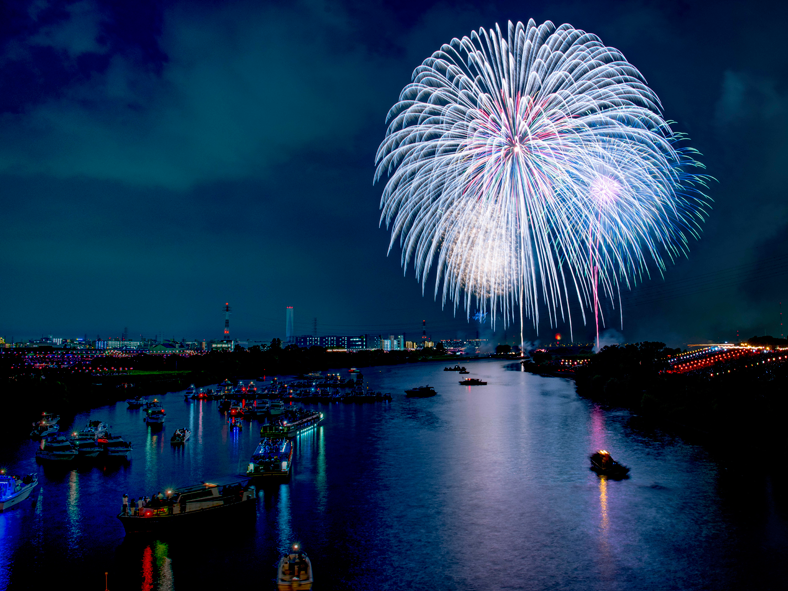
One of the largest fireworks display in Tokyo, the Itabashi fireworks festival will light up 12,000 fireworks over the Arakawa River. The show features a giant 700 meter long Niagra Falls fireworks as their specialty. It’s about an hour and a half with reserved seating for the best seats. If you don’t want to pay for the reserve seating, you can watch nearby standing or simply sitting on the ground.

*The fireworks display is usually held in early August but was cancelled due to the corona virus in 2020 and moved to May in 2021 for the Tokyo Olympics. It is unsure on whether it will be in August moving forward.

Entrance fee: Depends on option

Photo credit: Sagaswhat Tokyo

Photo credit: Tokyo Weekender

Location: Near Nishidai Station on the Toei Mita Line

Hours: 7:00pm 8:30pm

Dates: Early August (May in 2021 due to Tokyo Olympics)

Website: N/A

How to get there: A 20-30 minute train ride from Tokyo Station.

 
SEPTEMBER | AKASAKA HIKAWA FESTIVAL

A medium scaled, community festival hosted by the Hikawa Shrine, the Hikawa Festival is a fun, energetic festival for the local neighborhood in mid-September. It’s held over three days from Friday - Sunday and features traditional carnival games, food stalls, dancing and music. The main attraction comes on the last day - Sunday - when they parade around a traditional wheeled float that can be raised to about 5 meters tall.

Entrance fee: Depends on option

Photo credit: Go Tokyo

Photo credit: Sagaswhat Tokyo

Location: 6 Chome-10-12 Akasaka, Minato City, Tokyo 107-0052, Hikawa Shrine

Dates: Mid-September

Website: N/A

How to get there: A 10 minute walk from Roppongi Station on the Tokyo Metro Hibiya Line.

 
SEPTEMBER | CHOFU CITY FIREWORKS (MOVIE TOWN'S AUTUMN FIREWORKS)

The city of Chofu is known as movie town due to the number of film production companies in the scene. So, naturally, their fireworks festival is set to music from movie scores and popular songs. The festival takes place on the grassy banks by Tama River every early September. It’s a lesser known fireworks festival, but the organizers don’t skip a beat on it’s scale. Over 10,000 fireworks will go up in front of 35,000 spectators along the river. It starts at 6pm and lasts until 7:30 pm. There are paid seating options for the best seats in the house, but free seating is available just along the banks of the river as well.

*Fireworks will be cancelled if there is a storm

Entrance fee: Depends on option

Photo credit: Go Tokyo

Photo credit: Go Tokyo

Location: Tama River, closest station is the Keio Tamagawa Station

Dates: Early September

Website: N/A

How to get there: The Keio Tamagawa Station is on the Keio Sagamihara Line. It’s about a 45 minute train ride from Tokyo Station.

 
SEPT/OCT | FUKURO FESTIVAL

Dating back to 1968, the Fukuro Festival started in order to promote 4 local stores on the west side of Ikebukuro Station. Today, it has grown to be a large, two-part festival through late September to early October involving the whole neighborhood.

The first part is the Owl Festival (Fukuro means owl in Japanese) and the second part is known as the Tokyo Yosakoi Festival which features a Yosakoi dance battle. The festival features a mikoshi parade(portable shrine), taiko drum shows, hayashi festival music, yosokai dancing, food stalls and a lively atmosphere.

Entrance fee: Free

Photo credit: Visiting Japan

Photo credit: Tokyo Weekender

Location: 1 Chome Minamiikebukuro, Toshima City, Tokyo 171-0022, Ikebukuro Station

Dates: Late September to early October

Website: N/A

How to get there: Ikebukuro Station is on the JR Yamanote, Saikyo, Shonan-Shinjuku Lines. It is also on the Tokyo Metro Marunouchi, Yurakucho and Fukutoshin Lines. A 20 minute train ride from Tokyo Station on either the Yamanote or Marunouchi Lines.

 
APRIL | HONO OZUMO SUMO FESTIVAL

April for Tokyo is famous for it’s cherry blossoms. But, aside from this beautiful scenery, you can also catch the annual, ceremonial sumo wrestling match that occurs at Yasukuni Shrine…for free! You can picnic around the shrine and enjoy watching the sumo wrestlers fight each other. The ceremony starts at around 9am with the wrestlers warm up routines. Then, the rest of the day the sumo wrestlers compete against each other. It’s a lot more laid back than regular tournaments because it’s not an official competition and at one point during the day there are even comedy routines by the sumo wrestlers where they mess around and throw the judges out the ring. It’s a fun, relaxing way to enjoy the day with an opportunity only available in Japan!

Entrance fee: Free

Photo credit: Time Out Tokyo

Photo credit: Visiting Japan

Location: 3-1-1 Kudankita, Chiyoda-ku, Tokyo 102-8246, Yasukuni Shrine

Hours: 9am - 3pm

Website: N/A

How to get there: A 5 minute walk from Kudanshita Station, Exit 1 on the Tokyo Metro Tozai, Hanzomon, and Toei Shinjuku lines. A 10 minute walk on the Iidabashi or Ichigaya Station on the JR Sobu and Chuo Lines.

 
APRIL/MAY | BUNKYO AZALEA FESTIVAL

For almost the entire year, the Nezu Shrine quietly sits in Bunkyo City, not attracting too much attention. But, from early April to early May, Nezu Shrine becomes a hot spot when all 3000 of their Azalea plants in their Azalea Garden bloom. In their 3000 Azalea plants, their are over 100 varieties of different Azalea including the extremely rare black karafune flower. The flowers blooming next to their hundreds of torii gates lined up together makes for a beautiful scenery. Expect it to get extra busy during golden week (first week of May) when their will be performances, activities, stalls and antiques throughout the festival.

Entrance fee: Main Shrine entrance free, but 200 yen for garden access.

Location: 1 Chome-28-9 Nezu, Bunkyo City, Tokyo 113-0031, Nezu Shrine

Dates: Early April to early May

Website: http://www.nedujinja.or.jp/

How to get there: A 6 minute walk from Nezu Station on the Tokyo Metro Chiyoda Line.

 
TOKYO IMPERIAL PALACE

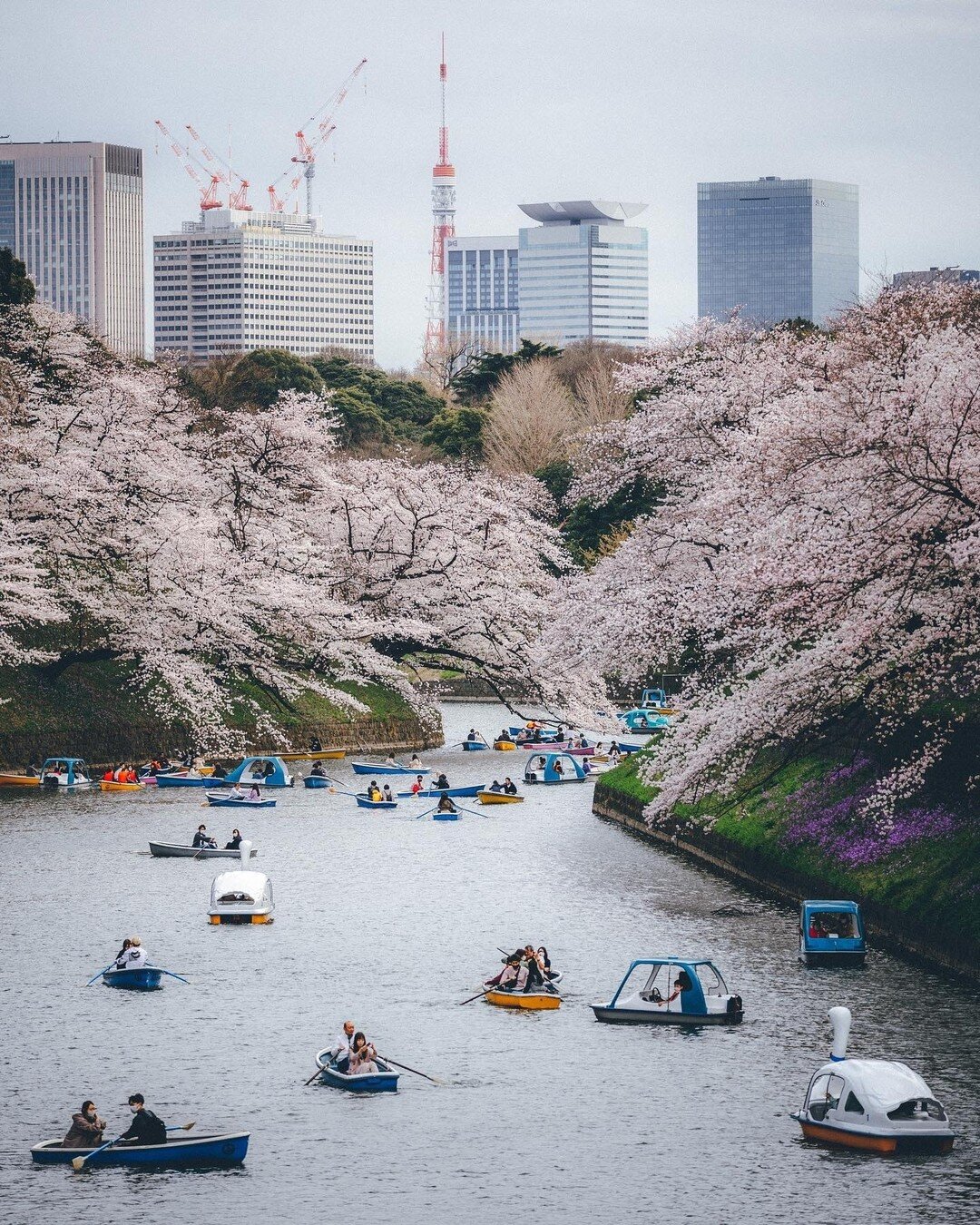
The current Imperial Palace sits at the former site of the Edo Castle surrounded by large moats and stone walls. It’s a short walk from Tokyo Station and is the household of the Imperial Family. The Edo Castle used to be occupied by Shogun Tokugawa who ruled Japan from 1603 - 1868. In 1868, the shogun was overthrown in what is known as the Meiji Restoration, and the country’s capital and Imperial Family moved from Kyoto to Tokyo. The palace was built in 1888, but destroyed once during the Second World War. It was rebuilt to it’s exact same style right afterwards.

Today, parts of the Imperial Palace are opened to the public. The inner grounds are usually closed except on January 2nd for a New Years greeting and on February 23rd for the Emperors birthday. The Imperial family makes appearances from a balcony on these special occasions. You can take a stroll around the Imperial Palace East Gardens, see the many bridges and moats from hundreds of years ago or even visit the Museum of Imperial Collections.

Entrance Fee: Free

Photo credit: Tokyo Dome Website

Photo credit: Japan Guide

Address: 1-1 Chiyoda, Chiyoda City, Tokyo 100-8111

Hours: Closed Sunday and Monday, 9:00am - 11:15am, 1:30pm - 2:45pm

Website: https://sankan.kunaicho.go.jp/english/index.html

How to get there: There are several gates to enter from, but the Otemon Gate is the main entrance. It is a 5 minute walk from the Otemachi Station on the Chiyoda, Tozai, Hanzomon, Marunouchi and Mita subway lines. It’s a 15 minute walk from Tokyo Station.

 
MAY | KANDA FESTIVAL

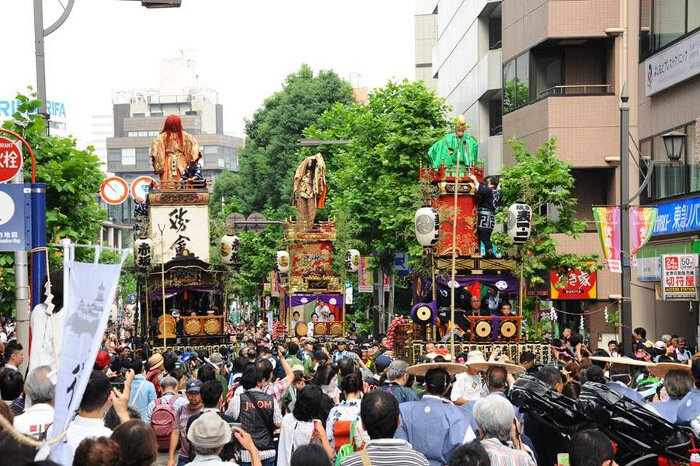
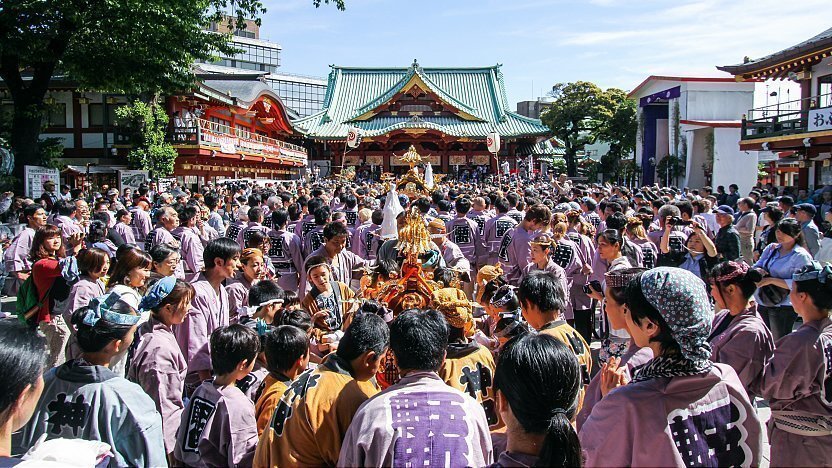
The Kanda Festival is one of Tokyo’s major Shinto festivals hosted by Kanda Myojin Shrine. It takes place in the middle of May, but is only held every odd numbered year, alternating with the Sanno Festival which takes place every even numbered year in June. It’s roughly a week long, but the main event is on the weekend closest to May 15, when the Shrine brings out their portable shrine and parades through different neighborhoods for two days. Like all festivals in Japan, there are food stalls, festival games and joyous festival music. You can also watch the parade with the portable shrines leave and return the shrine.

The festival has been around since the Edo period (1603-1868) as a demonstration of prosperity under the new Shogun, Tokugawa’s regime. During this period, the Kanda Festival and Sanno Festival were the only festivals allowed inside the Edo Castle (where the shogun resided). They were both held annually, but competition became too fierce that they were ordered to hold it in alternating years.

Entrance Fee: Free

Photo credit: Tokyo Cheapo

Photo credit: Japan Guide

Location: 2-16-2 Sotokanda, Chiyoda City, Tokyo 101-0021, Kanda Myojin Shrine

Dates: Weekend closest to May 15

Website: https://www.kandamyoujin.or.jp/what/

How to get there: A 5 minute walk from Ochanomizu Station on the JR Chuo Line. If you are in the Akihabara area, it’s about a 15 minute walk.

 
MAY | SANJA FESTIVAL

Usually held on the third full weekend of May, the Sanja festival is one of Tokyo’s biggest festivals. Hosted by the Sensoji Temple, this festival honors the three founders of the temple who are enshrined in the Asakusa Shrine right next to the temple. Over the course of the three days, over 2 million people visit the festival making it one of the most popular and wildest festivals.

Over the course of the weekend over 100 portable shrines are brought out and paraded around the streets to bring good fortune to the area. The main attraction is on the last day of the festival when the 3 main portable shrines are brought out. As with all festivals, the area of Asakusa will be packed with food stalls, festival games and a lively atmosphere filled with the sound of drums, flutes and instruments.

Entrance fee: Free

Photo credit: Go Tokyo

Photo credit: Tokyo Cheapo

Location: 2-3-1 Asakusa, Taito City, Tokyo 111-0032, Sensoji Temple

Dates: Third full weekend of May

Website: http://www.senso-ji.jp/english/

How to get there: A 5 minute walk from the Asakusa Station on the Ginza Line, Asakusa Line, Tobu Skytree Line and Tsukuba Express.