



HARAJUKU

Shibuya-ku, Tokyo

Harajuku is home to the youth fashion center of Japan. If Tokyo cities were to have a family, Harajuku would be the daughter to Omotesando and Aoyama and Shibuya would be it’s brother. Packed with kawaii (cute), bizarre and cutting edge shops, get yourself acquainted with the many boutique stores and cafes. Aside from fashion, Harajuku is known for one more thing...sweets! Famous for it’s crepes, cotton candies and weird looking sweets, Harajuku is the perfect place for Instagram worthy treats, or as we call it in Japan Insta-byeh worthy foods. Walk down the main Takeshita Dori Avenue to experience the true culture of Harajuku. But, don't be afraid to venture off to the side streets where you’ll find hidden gems.

While you’re in the area, be sure to check out the following:

  • Animal cafes to get greet the many different animals in Harajuku (owls, pigs and cats!)

  • Laforet for a vertical shopping complex for Japan’s youth fashion

  • The many crepe shops a long Takeshita Dori

 
tokyo-tours-harajuku-takeshita-street (2).jpg


How to get there

The main road, Takeshita Street is located right outside the JR Yamanote Lines Harajuku Station.

You can also get there by the Tokyo Metro Chiyoda Line or Tokyo Metro Fukutoshin Line by getting off at Meiji-Jingumae Station which is right in front of Takeshita Street.

 
KARA-AGE (JAPANESE FRIED CHICKEN) RECIPE

Kara-age is a Japanese style fried chicken! It’s often served in many Japanese restaurants outside of Japan, but in Japan it’s a common food enjoyed at izakayas (Japanese drinking establishments), in bento lunch boxes and street stalls. This juicy, flavorful and crispy chicken is a must try in Japan.

On our Tokyo food tour, we stop by an izakaya that specializes in kara-age and they are DELICIOUS! Learn to make kara-age by this simple recipe.

INGREDIENTS

  • 1.5 lbs of boneless chicken thigh with skin

  • 1/2 kosher/sea salt

  • ground pepper

  • 2 tbsp potato starch/cornstarch (more if necessary)

  • 2 tbsp all purpose flour (more if necessary)

  • neutral flavored oil (canola, vegetable)

    Seasoning

  • 1 knob ginger (Only need 1/2 teaspoon grated ginger)

  • 1 clove garlic

  • 1/2 tbsp soy sauce

  • 1/2 tbsp sake (sub with Chinese rice wine or skip)

  • 1/2 tsp sesame oil

    Garnishes (optional)

  • Lemon (optional put squeeze ontop)

  • Japanese mayonnaise to dip in

    Procedure

  • Cut each chicken thigh into 2-inch pieces and season with salt and freshly ground black pepper.

  • Grate the ginger (you will only need ½ tsp) and mince the garlic (I use a garlic presser).

  • In a large bowl, combine ginger, garlic, ½ Tbsp soy sauce, ½ Tbsp sake, and ½ tsp sesame oil. Whisk all together.

  • Add chicken in bowl and mix. Keep in fridge for 30 minutes to marinate.

  • Put oil in pot. Heat on medium heat to about 325 ºF (163 ºC).

  • Meanwhile, prep starch and flour in separate piles

  • First, lightly dredge each chicken piece in the flour. Then dredge the chicken in the potato starch and remove excess starch.

  • Same for rest of the chicken

  • When the oil temperature has reached 325 ºF (163 ºC), gently submerge each chicken piece into the oil. Do not overcrowd; add 3-5 pieces at a time. If you put many pieces in the oil, the oil temperature will drop quickly and chicken will end up absorbing too much oil.

  • First deep fry: Deep fry for 90 seconds or until golden brown. If it fries too quickly then the heat is too high. Pat with paper towel to remove excess oil once done.

  • Let chicken rest. It will cook all the way inside while it rests.

  • Second deep fry: Now heat oil to 350 ºF (177 ºC). Deep fry for 45 seconds or until it’s a nice golden brown color.

  • Frying it twice makes it crispier. Enjoy!

Photo credit: Just One Cookbook

Photo credit: Just One Cookbook

Recipe, procedure and video credits to Just One Cookbook

#tokyofoodtour #greentea #matcha #japanesegreentea #japantour #tokyotour #instagood #getinmybelly #photooftheday #instacool #tokyo #hellotokyotours #ilovetokyo #hellotyo #streetsoftokyo #visittokyo #foodie #foodtour #preciousmemories #familytravel #thingstodointokyojapan #tokyoguide #kamiyabar #tokyofoodtour #thingstodointokyojapan #tokyofoodtour #food #japanesecooking #japaneserecipes #japanesecurry

JAPANESE TONKATSU CURRY

A delicious bowl of Japanese curry for dinner - tender pieces of chicken, carrots, potatoes, curry sauce and any other ingredients you wish to put in can make for a very simple and easy Japanese meal from home!

Coming from a Japanese family, a common household meal that my mother liked to cook when she was very busy was curry. You can have it prepared in the morning or even the day before and simply heat it up when you’re ready to eat.

Japanese curry compared to Thai and Indian curry is much thicker and less spicy. In fact it’s a bit sweeter compared to the other curry recipes so it’s often seen as a beloved kids food in Japan. Check out this recipe below

Video Credit to Tasty

INGREDIENTS (4 people)

Tonkatsu

  • 4 cups white rice cooked

  • 4 boneless pork chops

  • 4 shiso leaves

  • 4 slices mozzarella cheese

  • 1/2 cup flour

  • 3 eggs

  • 3 cups panko crumbs

  • oil, for frying

  • Curry packet

Curry

  • 1/2 onion sliced

  • 2 medium potatoes cubed

  • 1 medium carrot diced

  • 3 cups water (720ml)

  • Japanese curry paste (Golden Curry, Vermont Curry or Java Curry to name a few)

    Procedure

  • Season pork chops with salt and pepper.

  • Cut a large slit through the side of the pork.

  • Place cheese and shiso leaves inside the slit of the pork.

  • Repeat with remaining pork chops.

  • Put the pork in flour, then dip into eggs. Roll into panko bread crumbs evenly, dip in eggs

    again and roll in bread crumbs once again.

  • Repeat with other pork chops.

  • Heat oil over medium heat until 360F (185C).

  • Fry pork chops one at a time until golden brown and pat with paper towel. Let it rest.

  • In a pot, saute onions until translucent. Add in your potatoes and and carrots and cook for a few minutes.

  • Add water into pot and bring to a boil. Let the vegetables cook for 10-15 minutes or until soft.

  • Add curry paste into pot. Stir until dissolved.

  • Cook for another 10 minutes.

  • Slice pork cutlets into 1/2 inch slices.

  • To serve, place the pork cutlet slices over the rice, then pour a generous serving of curry on half of the pork.

  • Enjoy!

*How much curry paste is up to you. You can adjust amount to decide how much thicker and stronger in flavor you want your curry to be. Other foods like mushrooms and eggplants can be put in as well. GEt creative!

Photo credit: Matcha Website

Photo credit: Just One Cookbook

Photo credit: Chopstick Chronicles

Photo credit: Chopstick Chronicles

Recipe and procedure credits to Tasty

#tokyofoodtour #greentea #matcha #japanesegreentea #japantour #tokyotour #instagood #getinmybelly #photooftheday #instacool #tokyo #hellotokyotours #ilovetokyo #hellotyo #streetsoftokyo #visittokyo #foodie #foodtour #preciousmemories #familytravel #thingstodointokyojapan #tokyoguide #kamiyabar #tokyofoodtour #thingstodointokyojapan #tokyofoodtour #food #japanesecooking #japaneserecipes #japanesecurry

OMOTESANDO AND AOYAMA

Minato-ku, Tokyo

Right beside Harajuku, the youth-oriented fashion capital of Japan, Omotesando and Aoyama would be the parents of Harajuku and Shibuya. Catered for the older, cultivated crowd, this area is packed with high-end fashion, boutiques, unique architecture and fancy cafes. You can take a stroll down the main Omotesando Avenue which will greet you with endless shopping. This road connects down to Aoyama for more shopping and a lot more distinctive architecture. But along the way, be sure to to look to your right and left as this main road tucks away lots of side streets for many hidden boutiques and cafes!

While you’re in the area, be sure to check out the following:

  • Cat Street for the recent, trendy fashion shops

  • Souvenir shopping for Japan’s most unique gifts at Oriental Bazaar and Kiddy Land

  • Nezu Museum for traditional art and a beautiful Japanese garden

  • Unique architecture at the Prada shop.

  • High end cafes

Photo credit: Three Staples

Photo credit: JW Magazine

How to get there

The main road is located just outside the Omotesando Station which can be accessed on the Chiyoda Line, Ginza Line or Hanzomon Line.

If you are coming through the JR Line, you can get off at Harajuku Station and take a short, pleasing walk down the tree lined boulevard to the main road.

 
JAPANESE STATIONARY ITEMS BY KAKIMORI

Japan is known for it’s amazing and unique stationaries. While you can look at big name, standard brands at shops like Tokyu Hands and Loft, Kakimori offers high-end, high quality stationaries that are one of a kind. It’s a well known store among stationary enthusiasts and is located in Kuramae - a neighborhood well known for it’s leather-work and other artisan crafts like stationaries. At the shop, you can purchase a customized notebook, try out their varieties of fountain pens, pens, and pencils, and see some of their unique stationaries and goods. A few minutes a way they also cooperate with Ink Stand, a shop where you can make custom colors of your own ink. It’s truly a unique store for stationaries!

Photo credit: Three Staples

Photo credit: Kakimori

Where to buy: 1-6-2, Misuji, Taito, Tokyo, Japan zip.1110055

Tel: +81.50.1744.8546

Website: https://kakimori.com/english

Hours: Closed Monday, Open Tuesday – Friday, 12pm - 6pm

Weekend & public holidays, 12pm – 7pm

LACQUER WARE FROM YAMADA HEIANDO

A long time seller to the Imperial household, Japanese embassies, renowned shrines/temples and major global enterprises, Yamada Heiando has been selling high quality lacquer ware for over 90 years. They have also received the Emperor’s royal warrant, which is an honorable title given to traditional Japanese brands that the Imperial household has appointed to use. Receiving the royal warrant is no easy feat, in fact it’s impossible to obtain today. The last one that was handed out was in 1954 when they officially stopped giving this honor out. This makes Yamada Heiando one of the oldest stores holding the warrant to this day.

Photo credit: Wikipeda

Where to buy: G-202, Hillside Terrace 18-12 Sarugaku-cho, Shibuya-ku, Tokyo 150-0033

Tel: N/A

Website: http://www.heiando1919.com/fs/heiando1919/c/about_us

Hours: Monday - Saturday, 10:30am - 7:00pm

Sundays and holidays, 10:30am - 6:30pm

DARUMA DOLLS

Daruma dolls are a traditional Japanese round dolls modeled after Bodhidharma - the founder of Zen Buddhism. They are typically red and depict a bearded man. These dolls are a symbol of good luck and perseverance and is common to be given to people as gifts. Daruma dolls can be purchased at big temples or tourist shopping spots. Asakusa’s Nakamise Street holds many tourists shops that would have Daruma dolls.

Photo credit: Spoon Tamago

Photo credit: Wikipeda

Where to buy: Nakamise Shopping Street, 1 Chome-36-3 Asakusa, Taito City, Tokyo 111-0032

Tel: N/A

Website: http://asakusa-nakamise.jp/e-index.html

Hours: 10:00am- 5:00pm

EDO KIRIKO GLASS ITEMS BY KAGAMI

Kagami was founded in 1934 by Kozo Kagami. They opened up as Japan’s first ever crystal glass factory and specialize in edo kiriko, a type of traditional Japanese cut glass. For over 80 years, they have developed advanced glass making skills and techniques. Their high quality glass is also widely used on official occasions such as receptions for state guests, Japanese embassies and consulate generals across the world. Kagami has also recieved special commissions from the imperial family.

Photo credit: Matcha

Photo credit: Kagami website

Where to buy:  Daiwa Building, 2-1, Ginza 6-Chome, Chuo-ku, Tokyo 104-0061

Tel: 03-3569-0081

Website: https://www.kagami.jp/english/shop/ginza.html

Hours: From Mon-Fri, 11:00~19:30

Sat, Sun and holiday, 11:00~18:30

FUROSHIKI BY MUSUBI (TRADITIONAL JAPANESE WRAPPING CLOTH)

Wrap any of gifts or goods with a traditional Japanese furoshiki. A furoshiki is a traditional Japanese cloth used to wrap any belongings when transporting things, lunches, gifts or goods. And the best part about it? They’re reusable and have beautiful patterns on them. Musubi has been selling furoshikis in Kyoto since 1937 and they recently opened up a shop in Tokyo. Aside from the traditional uses of furoshiki, Musubi has also incorporated modern, contemporary approaches by having ways to wrap furoshikis as bags, bottle holders, handkerchiefs and more! They sell furoshikis in 8 different types of material including silk, organic cotton and wool!

Photo credit: Spoon Tamago

Photo credit: Musubi

Where to buy: 2-31-8, Jingumae, Shibuya-ku, Tokyo, 150-0001 Japan

Tel: +81-3-5414-5678

Website: https://www.musubi-furoshiki.com/

Hours: Closed on Wednesdays, 11:00am - 7:00pm

Video credit: Musubi

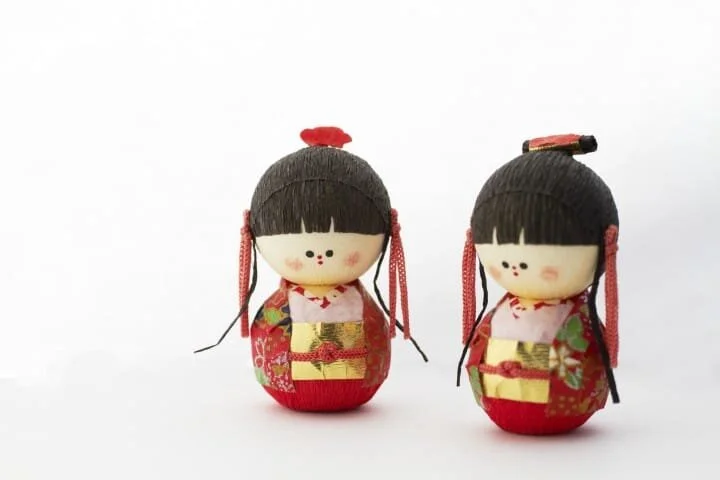
OKIAGARI KOBOSHI DOLLS

Okiagari Koboshi dolls are traditional dolls with unique and charming features painted on them. Okiagari literally means to get up. These cute little dolls will stand up even after being pushed down! They are sold in almost any souvenir shops throughout Japan. A great place for souvenir shops and souvenir items like this would be at Tokyo Skytree.

Photo credit: Savvy Tokyo

Photo credit: Matcha

Where to buy:  1 Chome-1-2 Oshiage, Sumida City, Tokyo 131-8634

Tel: 0570-550-634

Website: http://www.tokyo-skytree.jp/en/

Hours: 8:00am - 9:30pm