
DAY TOURS FROM TOKYO | RIDE THE HAKONE ROPEWAY

The Hakone Ropeway is an easy and fun way to get around Hakone which is all included in the Hakone Free Pass. Connecting Sounzan Station to Togendai Station (the shores of Lake Ashi), this ropeway offers an incredible view of the sulfur fields of Owakudani, Lake Ashi and Mt. Fuji if the weather permits. A long the way you will have to get off at Owakudani Station to transfer onto a different different cable car to continue on the line, however, passengers usually choose to explore the Owakudani Valley to witness the sulfurous hot spring sources being exhaled out of the mountain and to eat their signature black eggs cooked in hot springs.

If you choose to come from Togendai Station, you most likely came on through the Hakone Sightseeing Cruise (which is also included in the Hakone Free Pass) and if you came from Sounzan Station, you likely made your way from Hakone Yumoto (which is included in the Hakone Free Pass as well). At each station, a cable car comes roughly every minute and can see about 10 people.

Hakone travel: The breathtaking view of the sulfurous field at Owakudani Valley.

Hakone travel: The breathtaking view of the sulfurous field at Owakudani Valley.

Access:

To get to Sounzan Station, its a short cable car ride from Gora Station.

Gora Station Address: Gora Station, Gora, Hakone, Ashigarashimo District, Kanagawa 250-0408

The Togendai Station is next to the pier of the Hakone Sightseeing boat.

Hakone Sightseeing Boat Pier Address: 164 Motohakone, Hakone, Ashigarashimo District, Kanagawa 250-0522
#tokyofoodtour #greentea #matcha #japanesegreentea #japantour #tokyotour #instagood #getinmybelly #photooftheday #instacool #tokyo #hellotokyotours #ilovetokyo #hellotyo #streetsoftokyo #visittokyo #foodie #foodtour #preciousmemories #familytravel #thingstodointokyojapan #tokyoguide #kamiyabar #tokyofoodtour #thingstodointokyojapan #tokyofoodtour #hakonetravel #hakone #owakudani #volcano #japanesegardens

Laura Blackhall
TOKYO FOOD TOUR | EAT FRUITS PARFAIT AND FRUITS SANDWICH

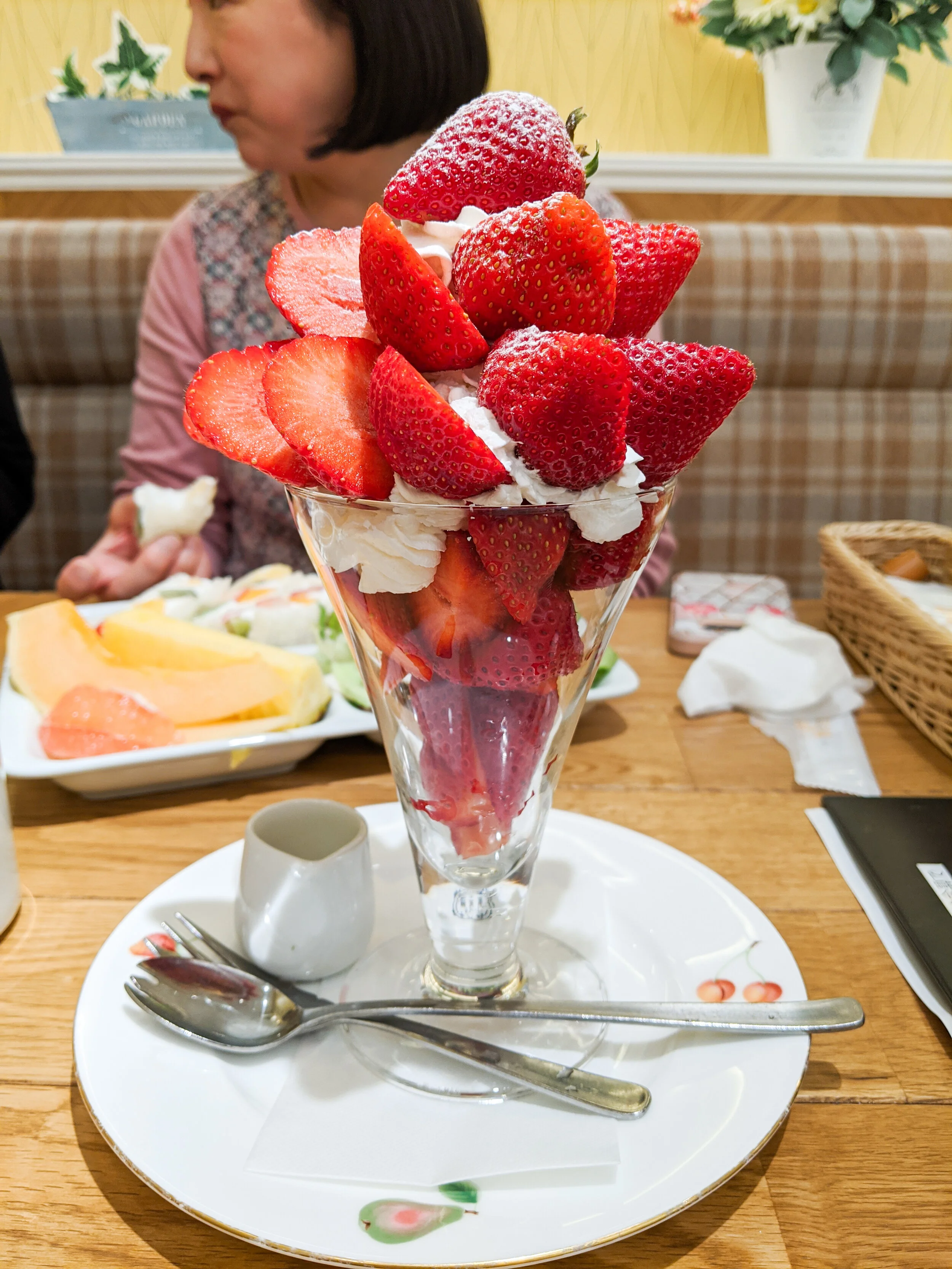
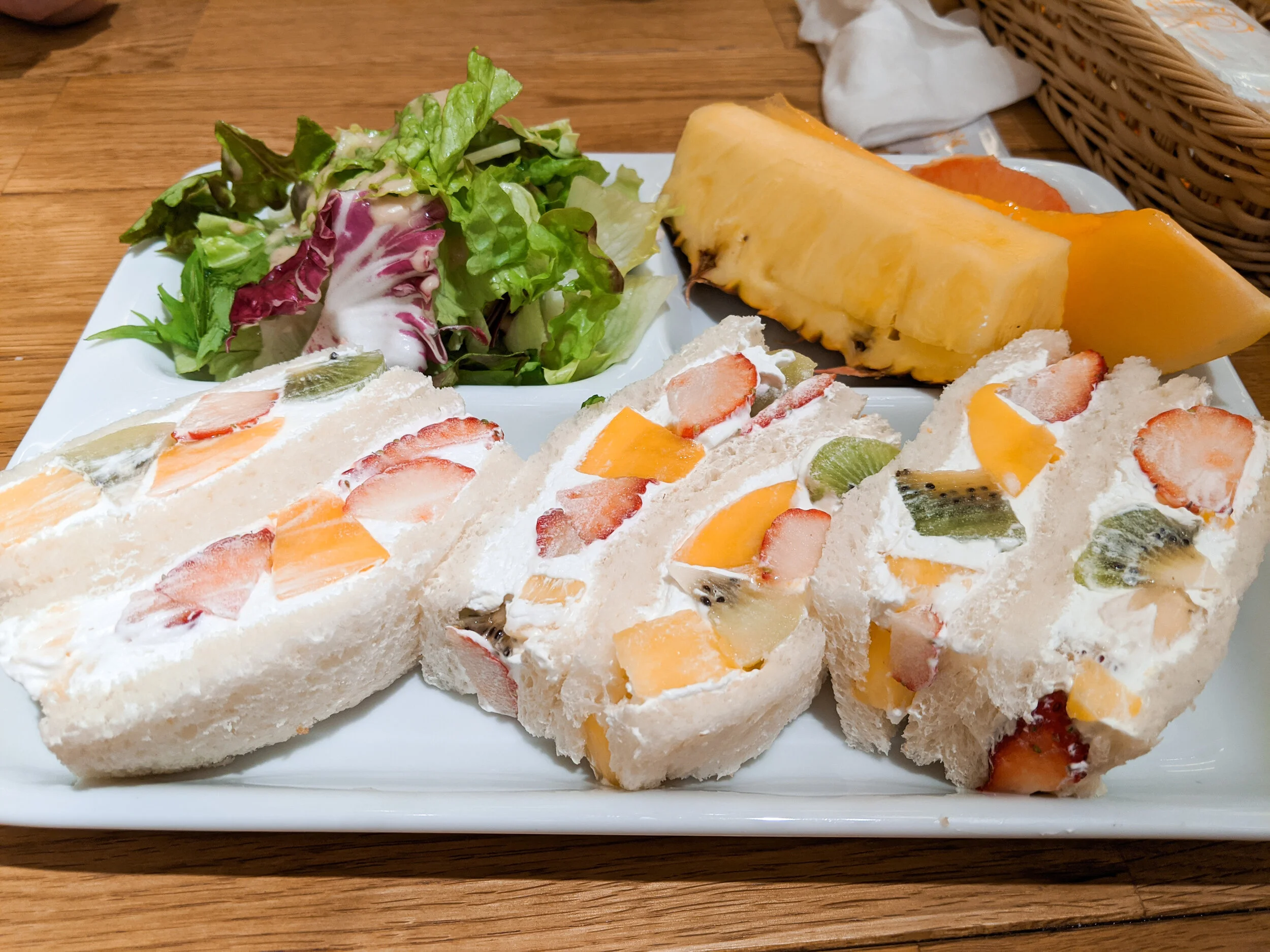
The fruits parfait and fruits sandwich are common sweets enjoyed in Japan. These sweets are often served at cafes that are enjoyed with a cup of tea or coffee. Kajitsuen has been serving high quality fruits for over 50 years and their signature parfaits and fruits sandwich will leave you in a fruits heaven! They have multiple branches throughout Tokyo, and it is said that their fruits are hand picked from their distributor to make sure they get good quality fruits. All their desserts are made with the right balance - the cream and other fillings aren’t too overwhelming to mask the fruits and the fruits are perfectly sweet and juicy.

If you do order a fruits sandwich set, you also get unlimited tea and coffee so don’t miss out!

Enjoy delicious fruits at Kajitsuen Fruit Parlor in select locations in Tokyo.

Enjoy delicious fruits at Kajitsuen Fruit Parlor in select locations in Tokyo.

They have different locations throughout Tokyo:

Fruit Parlor Kajitsuen Liber Shinjuku

〒151-0053 Tokyo, Shibuya City, Yoyogi, 2 Chome−7−7 南新宿277ビル 1F

Open everday: 7:30-23:00 (22:00 on Sunday)

Fruit Parlor Kajitsuen Liber Meguro

〒153-0063 Tokyo, Meguro City, Meguro, 1 Chome−3−16 プレジデント目黒ハイツ 2階

Open Everyday: 7:30-22:15 (21:15 on Sunday)

Kajitsuen Tokyo Station

〒100-0005 Tokyo, Chiyoda City, Marunouchi, 1 Chome−9−1 キッチンストリート内

Open Everyday: 7:30-22:00

Fruit Parlor Kajitsuen Liber Shibuya Hikarie

〒150-0002 Tokyo, Shibuya City, Shibuya, 2 Chome−21−1, Hikarie, 6F

Open Everyday: 11:00-23:00

Tokyo Food Guide: Try fluffy, delicious fruits sandwich in Tokyo at Kajitsuen.

Tokyo Food Guide: Try fluffy, delicious fruits sandwich in Tokyo at Kajitsuen.

#tokyofoodtour #greentea #matcha #japanesegreentea #japantour #tokyotour #instagood #getinmybelly #photooftheday #instacool #tokyo #hellotokyotours #ilovetokyo #hellotyo #streetsoftokyo #visittokyo #foodie #foodtour #preciousmemories #familytravel #thingstodointokyojapan #tokyoguide #kamiyabar #tokyofoodtour #thingstodointokyojapan #tokyofoodtour #hakonetravel #hakone #owakudani #volcano #japanesegardens

Laura Blackhall
TOKYO FOOD TOUR | EAT TONKATSU

This breaded, deep fried pork cutlet served with a bowl of rice, miso soup and shredded cabbage will leave you dreaming about it for days. Maisen in Tokyo has been serving tonkatsu since 1965. They fry up different types of pork’s and also serve their signature tonkatsu sandwich - a must try along with your meal. Their specialty kurobuta pork, or Japanese black pork is from the Berkshire pig which is prepped with care so that every bite is juicy and tender. Every chef at a Maisen is required to go through their tonkatsu school to learn all about tonkatsu and how to properly prepare it to leave a lasting impression.

Enjoy some tonkatsu on a Tokyo tour with Hello! Tokyo Tours.

Enjoy some tonkatsu on a Tokyo tour with Hello! Tokyo Tours.

Maisen has different branches throughout Tokyo. They have a lot of stand up stores inside stations that just sell the tonkatsu sandwiches, so here are a couple of locations that are dine-in restaurants.

Tonkatsu Maisen Aoyama Honten (Original store)

4 Chome-8-5 Jingumae, Shibuya City, Tokyo 150-0001

Open everyday 11:00-21:45

Tonkatsu Maisen Shibuya Hikarie

〒150-0002 Tokyo, Shibuya City, Shibuya, 2 Chome−21−1 渋谷ヒカリエ6F

Open everyday 11:00-22:00

Tonkatsu Maisen Tokyu Toyoko

〒150-0002 Tokyo, Shibuya City, Shibuya, 2 Chome−24−1 東急百貨店東横店西館 9F

Open everyday 11:00-22:00

Tonkatsu Maisen Daimaru Tokyo

〒100-6701 Tokyo, Chiyoda City, Marunouchi, 1 Chome−9−1 大丸東京店12F

Open everyday 11:00-23:00

Tokyo Food Guide: Enjoy Maisen’s specialty tonkatsu sandwich.

Tokyo Food Guide: Enjoy Maisen’s specialty tonkatsu sandwich.

#tokyofoodtour #greentea #matcha #japanesegreentea #japantour #tokyotour #instagood #getinmybelly #photooftheday #instacool #tokyo #hellotokyotours #ilovetokyo #hellotyo #streetsoftokyo #visittokyo #foodie #foodtour #preciousmemories #familytravel #thingstodointokyojapan #tokyoguide #kamiyabar #tokyofoodtour #thingstodointokyojapan #tokyofoodtour #hakonetravel #hakone #owakudani #volcano #japanesegardens

Laura Blackhall
TOKYO GUIDE | HOW TO SEE THE GODZILLA HEAD IN SHINJUKU

If you’re in Shinjuku and looking for things to do in Tokyo, Japan, stop by the Godzilla Head for a chance to encounter the head of a giant beast. Godzilla first came out in 1959 under Toho Co., Ltd. depicting a giant, destructive sea monster that was awakened by nuclear radiation from nuclear testing. It went on to make 32 more films under the same franchise and even holds the world record for the longest continuously running franchise film.

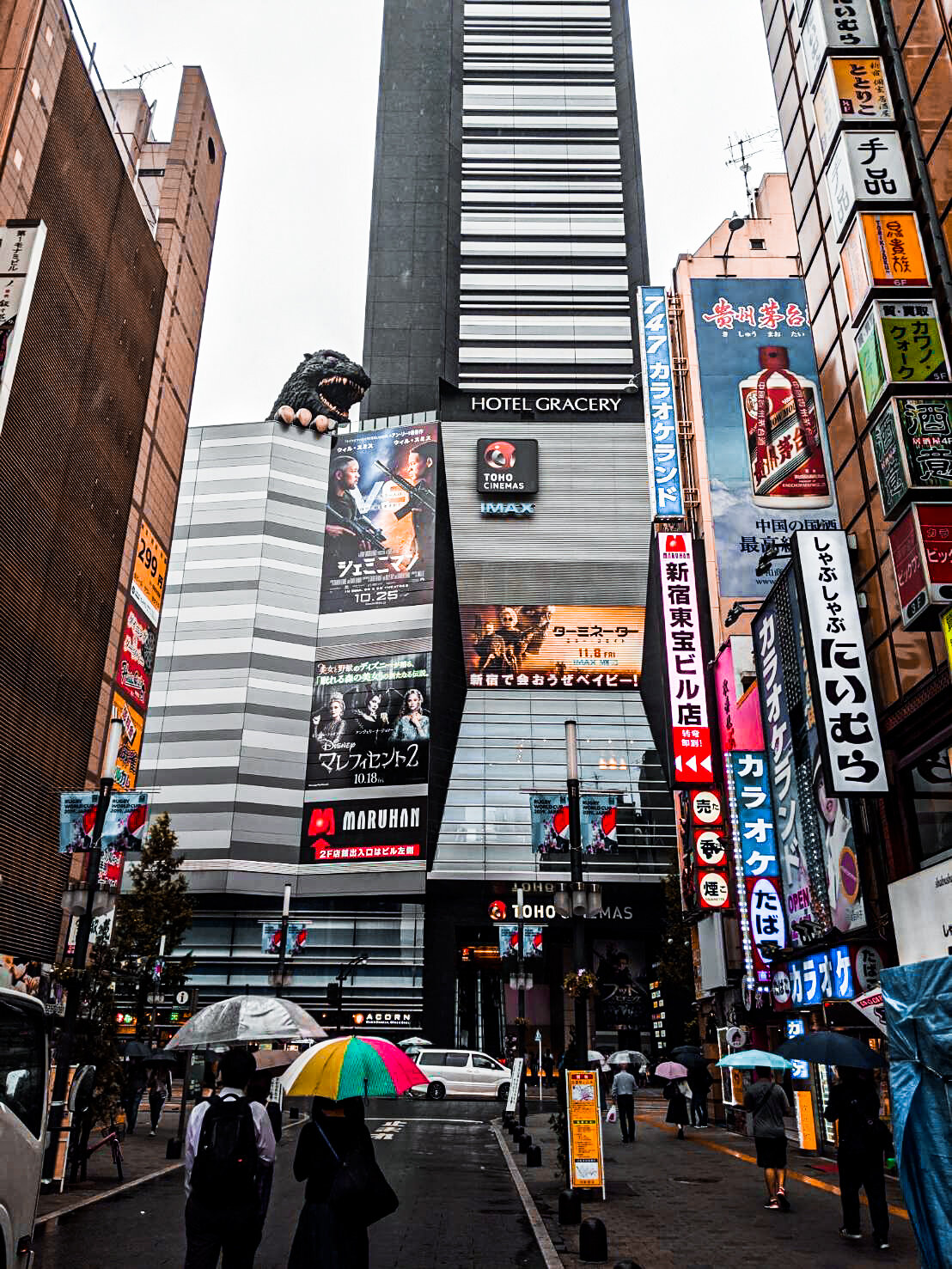
A giant 80 ton Godzilla head is placed on top of the Toho Cinemas in Shinjuku as a tribute to the movie. Get up close and personal with it by accessing it through the lobby level of Hotel Gracery.

Tokyo Guide: Witness Japans most destructive creature up close.

Tokyo Guide: Witness Japans most destructive creature up close.

Hours of operation:

Open 24 hours (lobby of hotel)

Location:

An 8 minute walk from Exit b12b of the JR Shinjuku Station.

1 Chome-18-8 Kabukicho, Shinjuku City, Tokyo 160-0021

Tokyo Guide: Godzilla Head on top of the Toho CInemas in Kabukicho.

Tokyo Guide: Godzilla Head on top of the Toho CInemas in Kabukicho.

#tokyofoodtour #greentea #matcha #japanesegreentea #japantour #tokyotour #instagood #getinmybelly #photooftheday #instacool #tokyo #hellotokyotours #ilovetokyo #hellotyo #streetsoftokyo #visittokyo #foodie #foodtour #preciousmemories #familytravel #thingstodointokyojapan #tokyoguide #kamiyabar #tokyofoodtour #thingstodointokyojapan #tokyofoodtour #hakonetravel #hakone #owakudani #volcano #japanesegardens

Laura Blackhall
THINGS TO DO IN TOKYO JAPAN | VISIT KOISHIKAWA KORAKUEN GARDENS

If you are looking for things to do in Tokyo Japan, and really want to get a beautiful scenery of nature, then look no further than the Koishikawa Korakuen Gardens. Located right next to the Tokyo Dome in Korakuen, it’s a nice peaceful garden to take a break from the bustle of the city life in Tokyo.

Completed in 1629, this garden was built by Tokugawa Yorifusa, a member of the ruling Shogun Tokugawa family of the edo period (1603-1868) and a daimyo. His son, Tokugawa Mitsukuni fully completed building it. When Misukuni was constructing the garden and wondering what to put in the garden, he incorporated some concepts from the Chinese Confucian scholar Shushunsui which included the Seiko Lake from China and a full moon bridge (the bridge is supposed to look like a full moon with the reflection of the water). It was named Korakuen after a Chinese poem which entertained the idea that a ruler should enjoy his power after pleasing his people first.

Tokyo Guide: Take a stroll at the Koishikawa Korakuen Garden in Tokyo.

Tokyo Guide: Take a stroll at the Koishikawa Korakuen Garden in Tokyo.

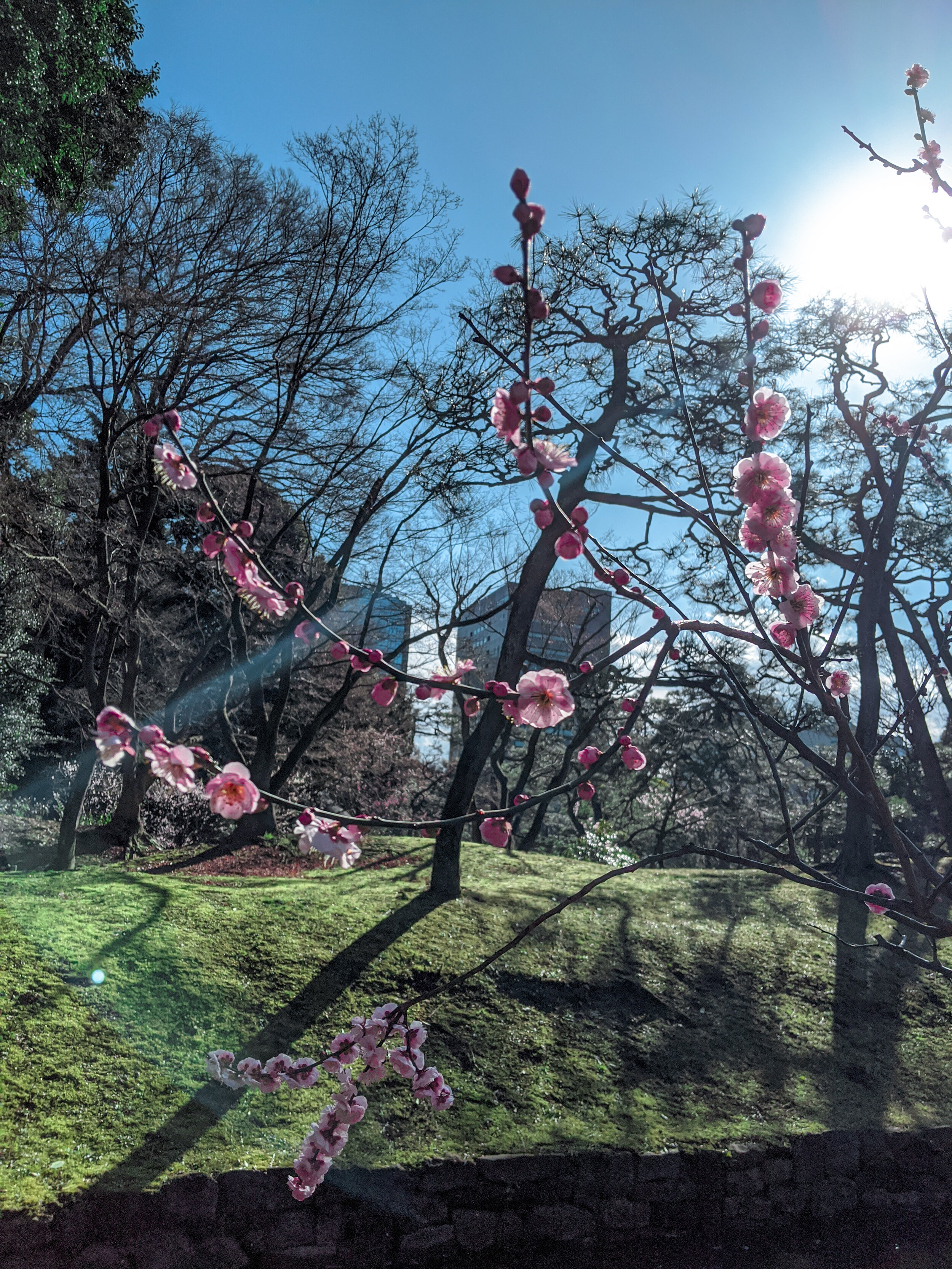
Depending on the time of the year, you can enjoy different color of leaves and different flowers blooming. In February, they usually have a plum blossom grove where you can see a lot of beautiful plums blossoming!

Location:

It is a 5 minute walk from the West Exit of Suidobashi Station on the JR Chuo Sobu Line.

1 Chome-6-6 Koraku, Bunkyo City, Tokyo 112-0004

Tokyo Guide: Plum blossom at the Koishikawa Korakuen Garden during February.

Tokyo Guide: Plum blossom at the Koishikawa Korakuen Garden during February.

Tokyo Guide: The full moon bridge is said to look like a full moon with the reflection of the bridge in the water.

Tokyo Guide: The full moon bridge is said to look like a full moon with the reflection of the bridge in the water.

#tokyofoodtour #greentea #matcha #japanesegreentea #japantour #tokyotour #instagood #getinmybelly #photooftheday #instacool #tokyo #hellotokyotours #ilovetokyo #hellotyo #streetsoftokyo #visittokyo #foodie #foodtour #preciousmemories #familytravel #thingstodointokyojapan #tokyoguide #kamiyabar #tokyofoodtour #thingstodointokyojapan #tokyofoodtour #hakonetravel #hakone #owakudani #volcano #japanesegardens

Laura Blackhall
JAPAN FOOD TOUR | EAT BLACK EGGS IN HAKONE

On your Japan food tour, if you are in Hakone, a must do activity is to go to Owakudani. At Owakudani, you might be asked if you want to try kuro tamago or literally black egg. You would understand why the eggs are black if you visit Owakudani and see its breathtaking views of the sulfurous fumes being expelled from the side of Mt. Hakone - an active volcano.

Owakudani is the only place in the world that sells these special black eggs! But you might be wondering why they are black. No they use no artificial coloring or any kind of artificial ingredients - it’s 100 percent all natural. These eggs are slowly boiled for sixty minutes in a pond that holds water from hot springs at about 80 degrees C (176 F) which is naturally heated from the Earth. Iron is absorbed by the egg from the natural hot spring water. The color of the eggs is a result of a chemical reaction with hydrogen sulfide (hydrogen sulfide is black). The black eggs are transferred to a steam container where it's steamed for 15 minutes to complete cooking the egg.  They actually don’t taste that much different from a regular boiled egg, but it definitely is delicious!

It is said that eating this egg adds 7 years to your life. According to legend, there is a jizo (statue of a guardian deity of children) located in Owakudani who promotes longevity and child raising. It was said that it was carved by Kukai or Kobo Daishi who is the founder of Shingon Buddhism in Japan who offered a prayer for the people suffering who saw this hellish scenery of a valley. This jizo became known as a good luck symbol and extending life spans if black eggs were consumed (there used to be a hot spring to cook egg near this jizo). The number 7 is used because it is a lucky number associated with the Seven Deities of Good Fortune and over the course of time it began to be associated with these black eggs.

If you travel to Hakone, this is a must eat and see on your Japan food tour. You can only buy a bag of 5 for 500 yen

Location:

You can access the Owakudani Station via rope-way on the Hakone Rope-way. Once you arrive, you will literally see black eggs being advertised everywhere. You wont miss it!

Address of Owakudani Station:

〒250-0631 Kanagawa, Ashigarashimo District, Hakone, 仙石原

Hakone Travel: Eating black eggs at Owakudani

Hakone Travel: Eating black eggs at Owakudani

#tokyofoodtour #greentea #matcha #japanesegreentea #japantour #tokyotour #instagood #getinmybelly #photooftheday #instacool #tokyo #hellotokyotours #ilovetokyo #hellotyo #streetsoftokyo #visittokyo #foodie #foodtour #preciousmemories #familytravel #thingstodointokyojapan #tokyoguide #kamiyabar #tokyofoodtour #thingstodointokyojapan #tokyofoodtour #hakonetravel #hakone #owakudani #volcano #mtfuji #blackeggs

Laura Blackhall
YOKOHAMA TOUR | GO ABOARD THE HIKAWA MARU

On our Yokohama tour, visit the Hikawa Maru Luxury Ocean Liner. In 1930, the NYK Line welcomed the Hikawa Maru to their fleet as a state of the art liner that carried passengers and cargo from Japan to Seattle. The boats frame was modeled after naval boats at the time which meant sturdy shell plating and water tight compartments protected the ship.

The Hikawa Maru served the Pacific into the 1960s by crossing it 254 times, carried over 25,000 passengers and was even used as a floating hospital ship during World War II to carry the wounded back to Japan. Now, it serves as a floating museum where you can stroll on the decks where people once enjoyed the ocean breeze and see what kind of dining and bedrooms various classes possessed.

Yokohama Guide: Go on aboard the Hikawa Maru on your Yokohama tour

Yokohama Guide: Go on aboard the Hikawa Maru on your Yokohama tour

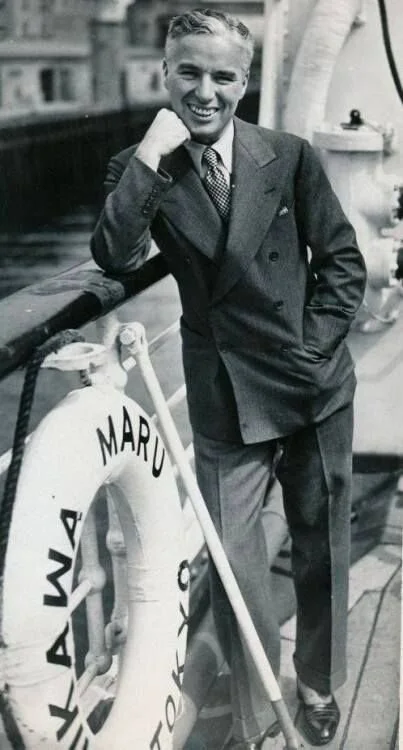
Over the 30 years it served, a couple celebrities have been on board and fell in love with this ocean liner. One man in particular loved the Hikawa Maru and also fell in love with Japan. Charlie Chaplin visited Japan after filming one of his most prominent films City Lights in 1932. The staff of Hikawa Maru found out that you really like Tempura, especially from a place called Hanacho in Tokyo; so the staff of Hikawa Maru sent one of their cooks to Hanacho to learn the secrets of frying tempura. Many shipping companies wanted Charlie Chaplin to come aboard their ship, but he ultimately chose Hikawa Maru because of having the tempura that he really liked. It is said that he are tempura everyday on his way back to the United States!

In fact, Charlie Chaplin’s story in relation to Japan doesn’t end here. Charlie Chaplin escaped assassination in Tokyo. In 1931 the UK, Japan, France, Italy and US signed The Treaty for the Limitation and Reduction of Naval Armament to reduce the naval arms race between the countries. Some ultra-nationalist naval officers disagreed with this and decided to assassinate Prime Minister Inukai Tsuyoshi in hopes to stage a coup d’etat and replace the government with a militaristic government. They planned to assassinate him in his home along with his son. The Prime Minister was also set to host Charlie Chaplin in his home for a welcome party, so the naval officers saw this as a n opportunity to assassinate Chaplin as well in hopes to start a war with the US.

However, when 11 naval officers stormed into the Prime Ministers home on May 15, 1932 they only found and shot the Prime Minister. The Prime Minsters son had taken Chaplin to a sumo match that day and the party was delayed to a different day. The officers were tried and received a light sentence and Chaplin would safely go home aboard the Hikawa Maru and continue making his mark in film history.

The Hikawa Maru, along with Charlie Chaplin have quite a history! Our Yokohama tour gives you a chance to board this ship and learn about this rich history in depth.

Location :

〒231-0023 Kanagawa, Yokohama, Naka Ward, Yamashitacho, 山下公園地先

Opened Tuesday-Sundays 10:00 AM - 5:00 PM. Closed Mondays.

Yokohama tour: Charlie Chaplin aboard Hikawa Maru.Image credit: https://chaplinfortheages.tumblr.com/

Yokohama tour: Charlie Chaplin aboard Hikawa Maru.

Image credit: https://chaplinfortheages.tumblr.com/

Yokohama Tour: Inside the Hikawa Maru - a first class cabin room.

Yokohama Tour: Inside the Hikawa Maru - a first class cabin room.

Laura Blackhall
JAPAN TOURS | VISIT OWAKUDANI IN HAKONE

Owakudani is a large area created by a crater during an eruption on Mt. Hakone nearly 300 years ago. It's still an active volcano zone which produces many hot springs in the area. The main attraction, where hot sulfur fumes are expelled from the Earth, can be accessed by the Hakone Rope-way at the Owakudani Station. On the rope-way up to Owakudani, you can even get a nice view of Mt. Fuji on a nice clear day. Visit Owakudani on a Japan tours during your visit to Japan.

The latest eruption was in 2015, when a very small phreatic eruption occurred. A phreatic eruption is a steam driven eruption. The water beneath the surface is heated up by magma and lava below which causes the water and pressure to explode. In a phreatic explosion only water, steam, debris and ash come out, with no expulsion of lava. However, the debris is still extremely hot.

The 2015 eruption was minor one with the farthest debris flying only about 30 meters away from the vent. Before the 2015 eruption there is no historical record of an eruption, however, according to carbon dating from the rocks, the last eruption could have occurred somewhere in the 12th or 13th century. Precursors to phreatic eruptions mean almost nothing and are pretty useless and in fact, phreatic eruptions and these types of volcanoes are actually very popular tourist attractions around the world.

Because of a lot of volcanic activity in the region, there are a lot of hot springs in the area. They are created by mixing steam and pumped water from underground. They have special steam production wells to make this. Lots of hot springs are also naturally heated water from the volcano which are then regulated by the hot springs establishment. In Japan, we call this onsen.

Onsen literally means hot spring or hot fountain. Lots of onsen will contain different types of minerals and chemicals that come naturally from the Earth, which are usually displayed in front of the onsen. Depending on what mineral it is, some have very healthy qualities which are believed to aid in healing small cuts, relieving stress, expanding arteries and more.

Location:

〒250-0631 Kanagawa, Ashigarashimo District, Hakone, 仙石原

Hakone Travel: A worker hiking down into the valley for a rot

Hakone Travel: A worker hiking down into the valley for a rot

Hakone travel: The Hakone Rope-way leading up to Owakudani.

Hakone travel: The Hakone Rope-way leading up to Owakudani.

#tokyofoodtour #greentea #matcha #japanesegreentea #japantour #tokyotour #instagood #getinmybelly #photooftheday #instacool #tokyo #hellotokyotours #ilovetokyo #hellotyo #streetsoftokyo #visittokyo #foodie #foodtour #preciousmemories #familytravel #thingstodointokyojapan #tokyoguide #kamiyabar #tokyofoodtour #thingstodointokyojapan #tokyofoodtour #hakonetravel #hakone #owakudani #volcano #mtfuji

Laura Blackhall
TOKYO GUIDE| NAKIRYU RAMEN - 1 MICHELIN STAR RAMEN RESTAURANT

With Tokyo holding 230 Michelin Stars and sitting at number one for the most Michelin Stars in one city, it can be quite a daunting task to make sure you are eating at the best places in Tokyo. Michelin Stars can also be quite expensive as the title comes with a price, but Nakiryu Ramen in Otsuka, Tokyo - the second ever ramen restaurant to be awarded a Michelin Star - is a very affordable option to enjoy a tasty bowl of ramen.

The menu is actually one of the cheapest Michelin Star restaurants in the world costing only 850 Yen (about 8 USD) for their cheapest option - their specialty tantanmen. Tantanmen is a Japanese take on it’s Chinese counterpart - dandanmen made from Szechuan pepper and chili for a kick. The Japanese Tantanmen has less of a kick but is packed with flavors for a more subtle, umami bursting taste. You can add different toppings to it for an extra cost - something that should not be overlooked.

Their mouth melting braised chashu pork and soy sauce dipped eggs are just few of their delicious toppings that should be included in the ramen experience. Their other dish - shoyu ramen is also another option that is regarded as one of the best shoyu ramens in Tokyo.

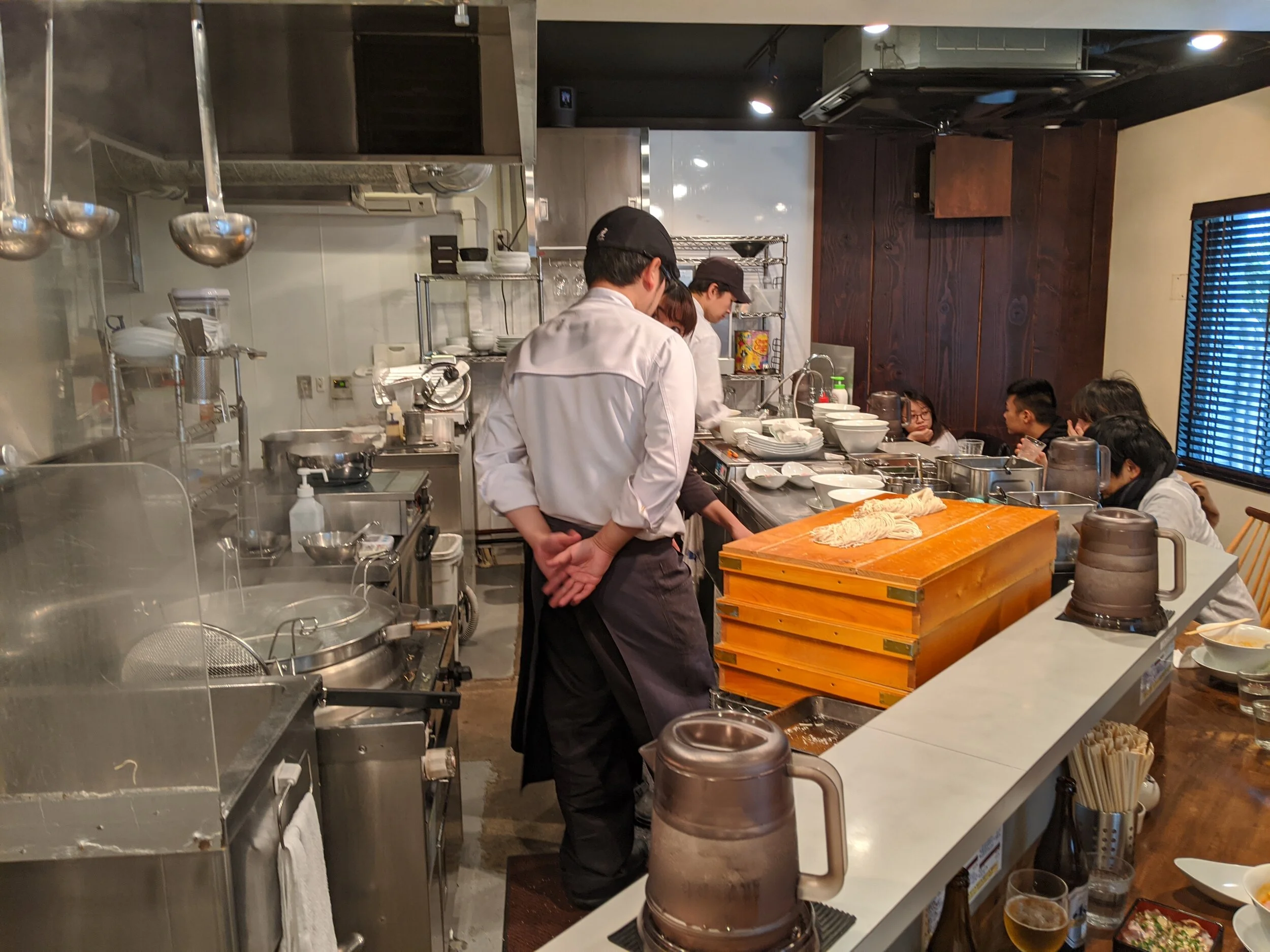
Tokyo Guide: Eat at One Michelin Star ramen restaurant Nakiryu

Tokyo Guide: Eat at One Michelin Star ramen restaurant Nakiryu

The restaurant only has 10 seats at a counter table top, and they take no reservations. So, expect to wait in line for about hour and half to two hours to get in. But, they allow one order per person so it actually goes by pretty quick. If you want to be one of the first people in, it’s best to go about 45 minutes to an hour early to ensure your spot at the front of the line.

Like any ramen joints, they are open for lunch, close for the afternoon and open for dinner again. Their operation hours are as follows:

Monday: 11:30 AM - 3:00 PM, closed for dinner

Tuesday: closed

Wednesday to Sunday: 11:30 AM - 3:00 PM and 6:00 PM - 9:00 PM

Access:

From the JR Otsuka Station, it’s about a 7 minute walk from the South Exit.

Location:

〒170-0005 Tokyo, Toshima City, Minamiotsuka, 2 Chome−34−4 SKY南大塚

Tokyo Guide: Visit the second ever Michelin star ramen restaurant to your list of things to do in Tokyo.

Tokyo Guide: Visit the second ever Michelin star ramen restaurant to your list of things to do in Tokyo.

#tokyofoodtour #greentea #matcha #japanesegreentea #japantour #tokyotour #instagood #getinmybelly #photooftheday #instacool #tokyo #hellotokyotours #ilovetokyo #hellotyo #streetsoftokyo #visittokyo #foodie #foodtour #preciousmemories #familytravel #thingstodointokyojapan #tokyoguide #tokyofoodtour #thingstodointokyojapan #tokyofoodtour #japanesefood #ramen #japaneseramen #michelinstar #foodie #bestramen

Laura Blackhall
HAKONE TOUR | VISIT THE OLD TOKAIDO CEDAR AVENUE AND CHECKPOINT

When Japan closed off it’s borders to the rest of the world in 1603 under Shogunate Tokuagawa’s rule, there was a domestic travel boom which soon would evolve into what we know today as tourism. Because travelling internationally became illegal in Japan from 1603-1868, people had more time to enjoy the beauty that surrounded them. To travel around Japan, five major roads were constructed in the early 17th century to facilitate travel throughout Japan. Of these five, the major one and most commonly used road was the Tokaido road which ran 514 km from Kyoto to Edo (Edo is original for Tokyo).

Japan had a small port in Nagasaki that allowed trade with the Dutch East India Company and Chinese traders which were strictly monitored. Any foreigners coming into the country had to stay on a little island called Dejima Island right off the port of Nagasaki and would have to get very special permission to be allowed to travel into the mainland. Of these foreigners who got special permission was Engelbert Kaempfer - a German physician and naturalist attached to the Dutch East India Company who got special permission to visit the Shogun at the imperial palace on their annual tribute to the shogun.

Kaempfer and his group, with the aid of the Japanese, used the Tokaido Road to travel into Edo. A long the way he wrote everything he experienced and saw on the Tokaido road. Much of his recordings on the Tokaido road became the core for his book The History of Japan - one of the only books at the time about Japan written by a westerner. He noted that the roads were lined with giant trees that provided shade for travelers and a nice natural scenery for people to enjoy on their travels. Kaempfer also noticed that the roads were clean all the time and witnessed that any trash would be picked up by neighboring villages. Horse droppings could be used as fertilizer for farms and debris could be burned.

This same road can be walked on today - just as Engelbert Kaempfer did in the 1690s. Right off the shore on Lake Ashinoko, a portion of the road can be found just 5 minutes from the Hakonemachi-ko bus/boat station. If you are coming from the Pirate boat sightseeing cruise its a quick 5 minute walk where you can also walk through the Tokaido Road Checkpoint. The checkpoint is where they checked travelers for permits and also served as a place to rest. The current checkpoint was rebuilt completely in 2007 but supposedly looks exactly like it did 400 years ago.

Location:

https://www.google.com/maps/dir/35.577353,139.7013494/old+tokaido+cedar+avenue/@35.4056684,138.8223212,9z/data=!3m1!4b1!4m9!4m8!1m1!4e1!1m5!1m1!1s0x601998658e560aef:0x4f456d8c9e9f5724!2m2!1d139.0277874!2d35.1945428

Hakone Guide: Visit the Old Tokaido Cedar Avenue

Hakone Guide: Visit the Old Tokaido Cedar Avenue

Laura Blackhall