
TOKYO GUIDE| NAKIRYU RAMEN - 1 MICHELIN STAR RAMEN RESTAURANT

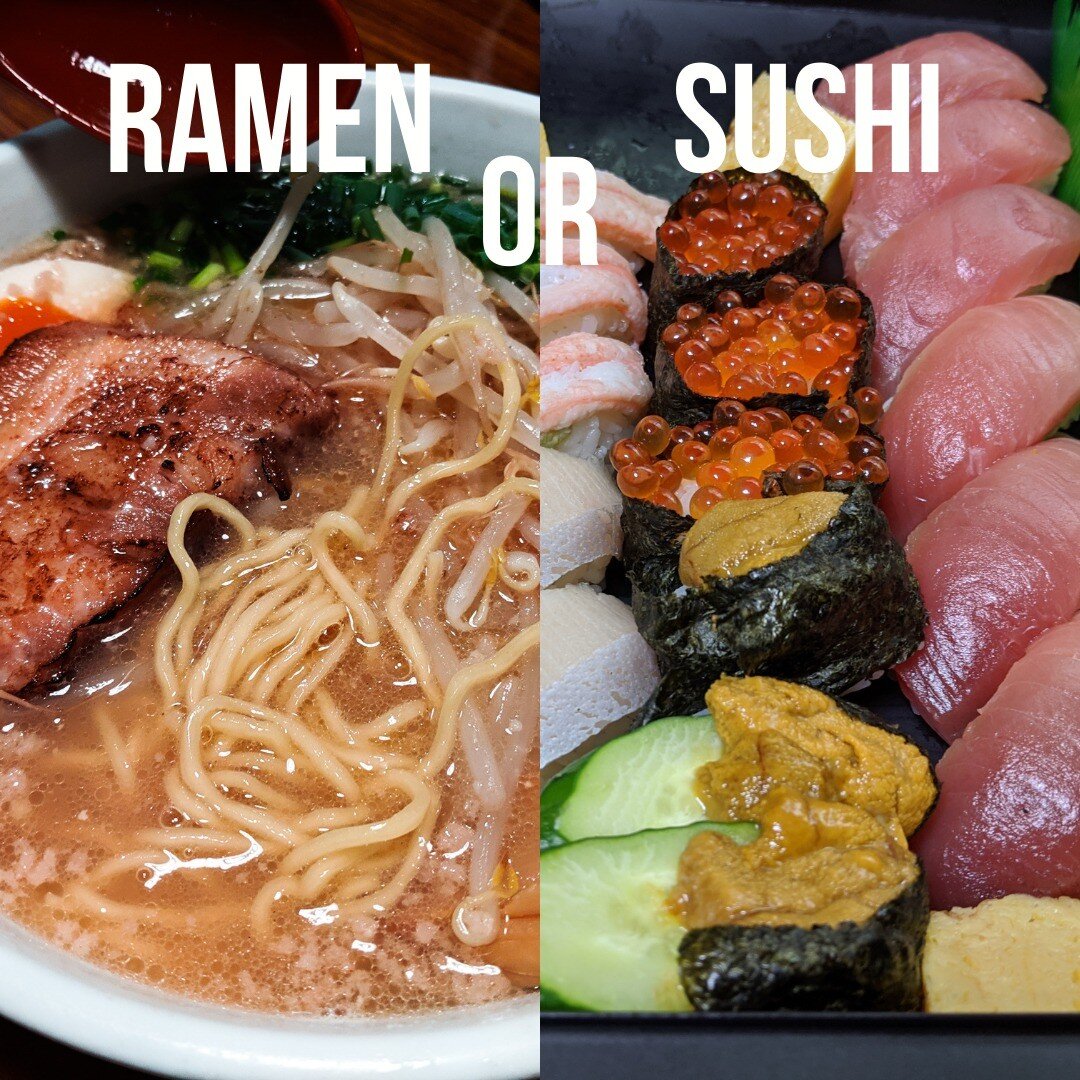
With Tokyo holding 230 Michelin Stars and sitting at number one for the most Michelin Stars in one city, it can be quite a daunting task to make sure you are eating at the best places in Tokyo. Michelin Stars can also be quite expensive as the title comes with a price, but Nakiryu Ramen in Otsuka, Tokyo - the second ever ramen restaurant to be awarded a Michelin Star - is a very affordable option to enjoy a tasty bowl of ramen.

The menu is actually one of the cheapest Michelin Star restaurants in the world costing only 850 Yen (about 8 USD) for their cheapest option - their specialty tantanmen. Tantanmen is a Japanese take on it’s Chinese counterpart - dandanmen made from Szechuan pepper and chili for a kick. The Japanese Tantanmen has less of a kick but is packed with flavors for a more subtle, umami bursting taste. You can add different toppings to it for an extra cost - something that should not be overlooked.

Their mouth melting braised chashu pork and soy sauce dipped eggs are just few of their delicious toppings that should be included in the ramen experience. Their other dish - shoyu ramen is also another option that is regarded as one of the best shoyu ramens in Tokyo.

Tokyo Guide: Eat at One Michelin Star ramen restaurant Nakiryu

Tokyo Guide: Eat at One Michelin Star ramen restaurant Nakiryu

The restaurant only has 10 seats at a counter table top, and they take no reservations. So, expect to wait in line for about hour and half to two hours to get in. But, they allow one order per person so it actually goes by pretty quick. If you want to be one of the first people in, it’s best to go about 45 minutes to an hour early to ensure your spot at the front of the line.

Like any ramen joints, they are open for lunch, close for the afternoon and open for dinner again. Their operation hours are as follows:

Monday: 11:30 AM - 3:00 PM, closed for dinner

Tuesday: closed

Wednesday to Sunday: 11:30 AM - 3:00 PM and 6:00 PM - 9:00 PM

Access:

From the JR Otsuka Station, it’s about a 7 minute walk from the South Exit.

Location:

〒170-0005 Tokyo, Toshima City, Minamiotsuka, 2 Chome−34−4 SKY南大塚
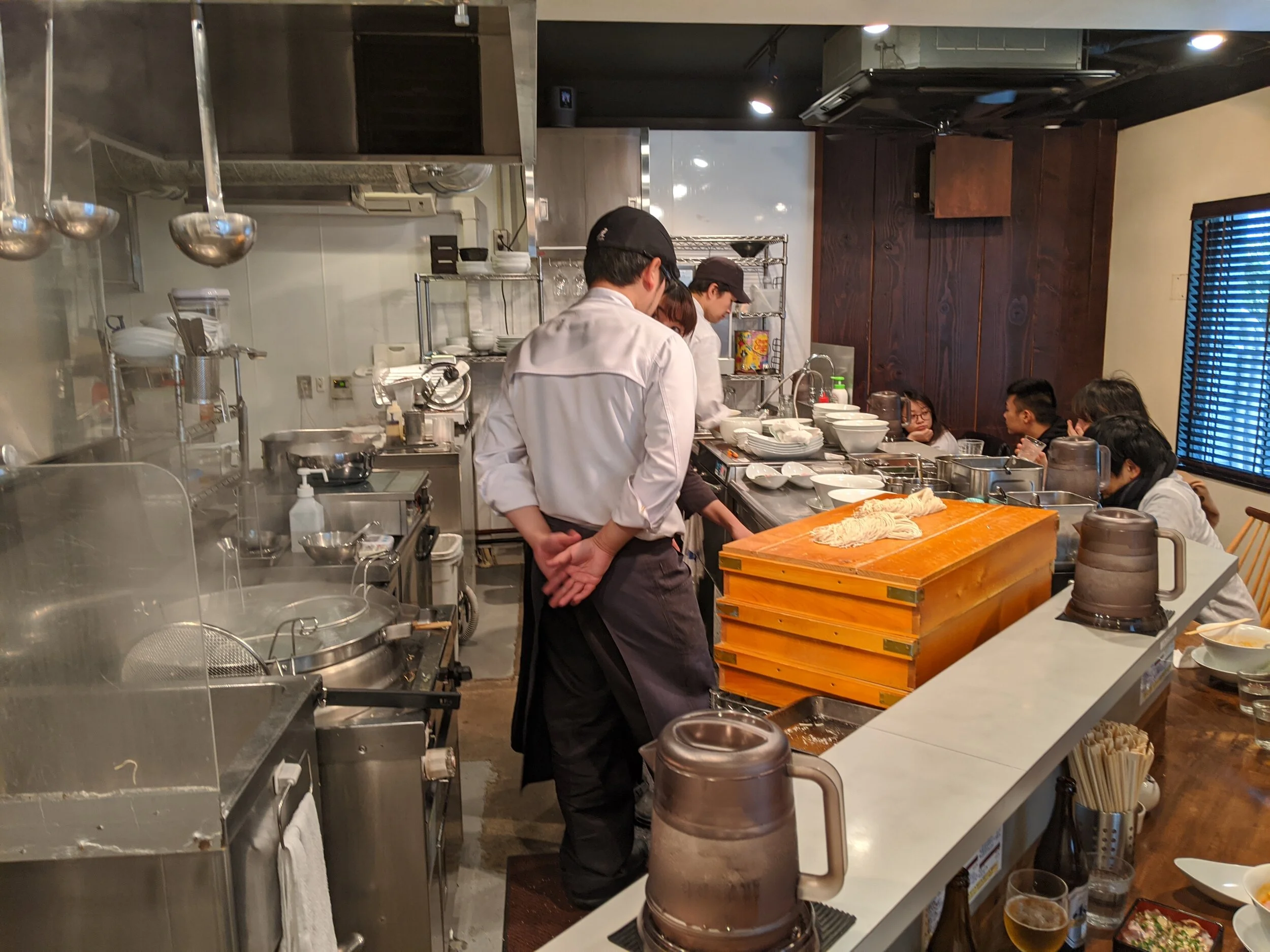
Tokyo Guide: Visit the second ever Michelin star ramen restaurant to your list of things to do in Tokyo.

Tokyo Guide: Visit the second ever Michelin star ramen restaurant to your list of things to do in Tokyo.

#tokyofoodtour #greentea #matcha #japanesegreentea #japantour #tokyotour #instagood #getinmybelly #photooftheday #instacool #tokyo #hellotokyotours #ilovetokyo #hellotyo #streetsoftokyo #visittokyo #foodie #foodtour #preciousmemories #familytravel #thingstodointokyojapan #tokyoguide #tokyofoodtour #thingstodointokyojapan #tokyofoodtour #japanesefood #ramen #japaneseramen #michelinstar #foodie #bestramen

Laura Blackhall
HAKONE TOUR | VISIT THE OLD TOKAIDO CEDAR AVENUE AND CHECKPOINT

When Japan closed off it’s borders to the rest of the world in 1603 under Shogunate Tokuagawa’s rule, there was a domestic travel boom which soon would evolve into what we know today as tourism. Because travelling internationally became illegal in Japan from 1603-1868, people had more time to enjoy the beauty that surrounded them. To travel around Japan, five major roads were constructed in the early 17th century to facilitate travel throughout Japan. Of these five, the major one and most commonly used road was the Tokaido road which ran 514 km from Kyoto to Edo (Edo is original for Tokyo).

Japan had a small port in Nagasaki that allowed trade with the Dutch East India Company and Chinese traders which were strictly monitored. Any foreigners coming into the country had to stay on a little island called Dejima Island right off the port of Nagasaki and would have to get very special permission to be allowed to travel into the mainland. Of these foreigners who got special permission was Engelbert Kaempfer - a German physician and naturalist attached to the Dutch East India Company who got special permission to visit the Shogun at the imperial palace on their annual tribute to the shogun.

Kaempfer and his group, with the aid of the Japanese, used the Tokaido Road to travel into Edo. A long the way he wrote everything he experienced and saw on the Tokaido road. Much of his recordings on the Tokaido road became the core for his book The History of Japan - one of the only books at the time about Japan written by a westerner. He noted that the roads were lined with giant trees that provided shade for travelers and a nice natural scenery for people to enjoy on their travels. Kaempfer also noticed that the roads were clean all the time and witnessed that any trash would be picked up by neighboring villages. Horse droppings could be used as fertilizer for farms and debris could be burned.

This same road can be walked on today - just as Engelbert Kaempfer did in the 1690s. Right off the shore on Lake Ashinoko, a portion of the road can be found just 5 minutes from the Hakonemachi-ko bus/boat station. If you are coming from the Pirate boat sightseeing cruise its a quick 5 minute walk where you can also walk through the Tokaido Road Checkpoint. The checkpoint is where they checked travelers for permits and also served as a place to rest. The current checkpoint was rebuilt completely in 2007 but supposedly looks exactly like it did 400 years ago.

Location:

https://www.google.com/maps/dir/35.577353,139.7013494/old+tokaido+cedar+avenue/@35.4056684,138.8223212,9z/data=!3m1!4b1!4m9!4m8!1m1!4e1!1m5!1m1!1s0x601998658e560aef:0x4f456d8c9e9f5724!2m2!1d139.0277874!2d35.1945428

Hakone Guide: Visit the Old Tokaido Cedar Avenue

Hakone Guide: Visit the Old Tokaido Cedar Avenue

Laura Blackhall
DAY TOURS FROM TOKYO | KAWAGOE TRAVEL GUIDE: KITA-IN TEMPLE

Tokyo can be a great city to explore, but taking a mini day trip from Tokyo to Kawagoe, a town in Saitama just an hour away from Tokyo can be a worthwhile experience to add to your list of things to do in Tokyo, Japan. Kawagoe is known for it’s edo period styled houses and shops, and it’s also famous for the Kita-In Buddhist Temple (喜多院)- the head temple of the Tendai Sect in the Kanto area.

Built roughly 1250 years ago, parts of the temple are parts of the former Edo Castle built in the 1600s. The halls of the edo castle were transferred into this temple in 1638 after the original structure of the temple was burned down. The third Tokugawa Shogunate ordered to move the edo castle parts in order to preserve the Kita-in temple. Today, these are one of the only remaining parts of the original Edo Castle as the the main Castle in Tokyo was destroyed in the Great Kanto Earthquake in 1923.

Kawagoe Guide: The Tahoto or Japanese Pagoda at the temple.

Kawagoe Guide: The Tahoto or Japanese Pagoda at the temple.

Another part of the temple to visit is the Gohyaku Rakan statues. There are 540 statues of Buddhas disciples lined up, each with different facial expressions. Because each facial expression is different, it is said that you can find one that resembles you, a friend or family. It is located in a small courtyard off to the side of the temple.

Location:

1 Chome-20-1 Kosenbamachi, Kawagoe, Saitama 350-0036

Kawagoe Guide: 540 Buddhist Rakan Statues. These are all disciples of Buddha.

Kawagoe Guide: 540 Buddhist Rakan Statues. These are all disciples of Buddha.

Kawagoe Guide: Rakan Statues back to back.

Kawagoe Guide: Rakan Statues back to back.

#tokyofoodtour #greentea #matcha #japanesegreentea #japantour #tokyotour #instagood #getinmybelly #photooftheday #instacool #tokyo #hellotokyotours #ilovetokyo #hellotyo #streetsoftokyo #visittokyo #foodie #foodtour #preciousmemories #familytravel #thingstodointokyojapan #tokyoguide #kamiyabar #tokyofoodtour #thingstodointokyojapan #tokyofoodtour #japanesefood #teamlabborderless

Laura Blackhall
THINGS TO DO IN TOKYO JAPAN | FIRST DIGITAL ART MUSEUM: teamLAB BORDERLESS

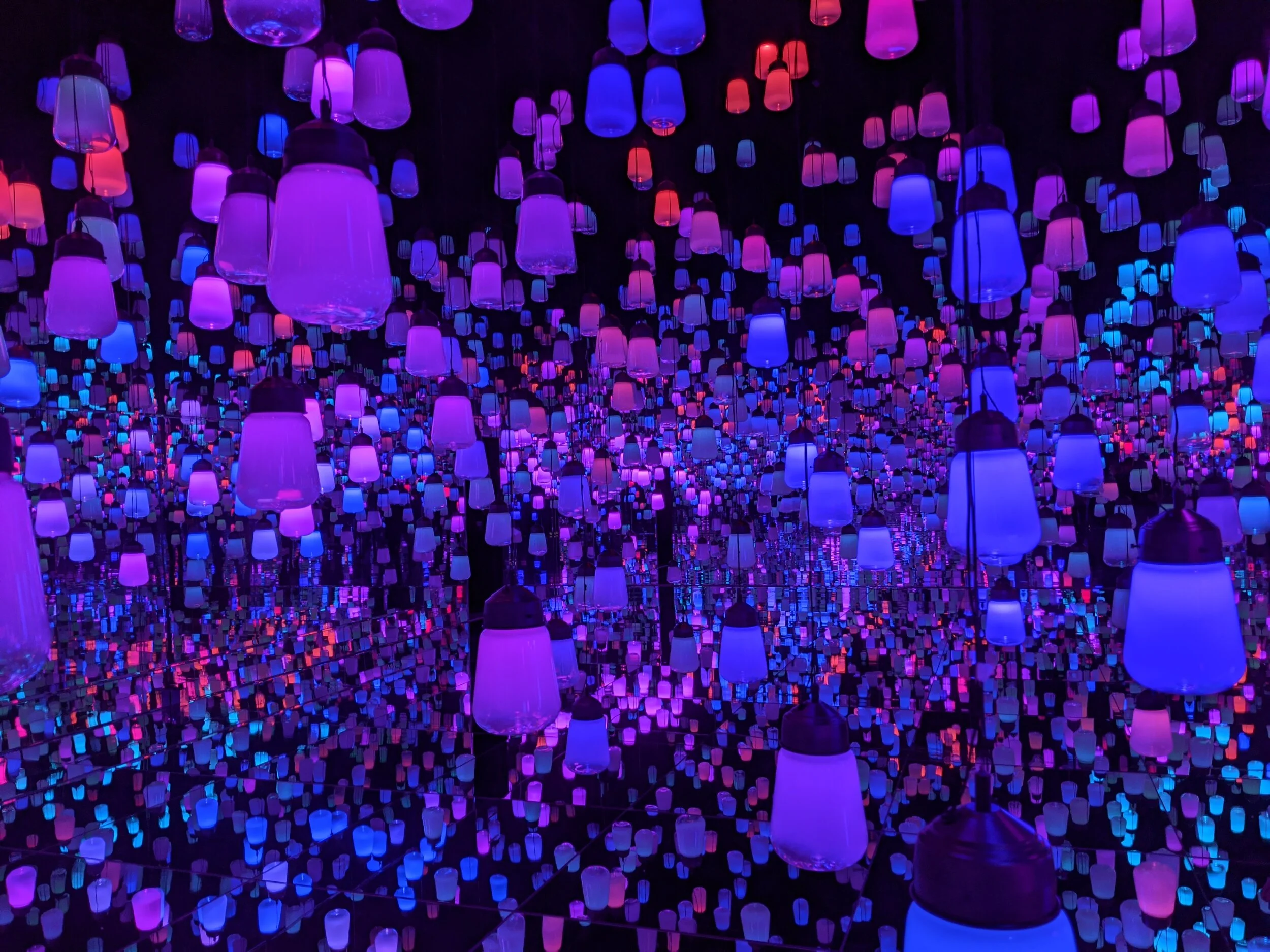
Wondering about things to do in Tokyo? There’s so much to do in this enormous city, but one thing you wouldn’t want to miss out on is going to teamLAB Borderless in Odaiba, Tokyo. Opening in the summer 2018, this digital art museum is one of a kind exhibition that features a 10,000 square meter venue with over 500 computers and 400 projectors to make an immersive art experience.

There are many different rooms and sections in this venue that seem “borderless” - as the name suggests, which features constant moving dynamic art. Due to it’s constant changing art, this museum never remains the same. Going into the museum twice or the same room twice will give you a new set of experiences.

The two most popular rooms at teamLAB is the Forest of Lamps and Crystal World, so be sure to check out these two rooms! The Forest of Lamps usually has a cue of 30 minutes to an hour, as they let in a small group of about 20 at a time to enjoy this exhibition for about 5-10 minutes, plenty of time and definitely worth it! The Crystal World usually has no wait, as it is a big open room that features thousands of dangling lights. It can be easy to get lost in this mesmerizing world!

Location:

〒135-0064 Tokyo, Koto City, Aomi, 1 Chome−3−8 お台場パレットタウン

Tokyo Guide: Forest of Lamps at teamLAB borderless

Tokyo Guide: Forest of Lamps at teamLAB borderless

Tokyo Guide: Crystal World at teamLAB borderless

Tokyo Guide: Crystal World at teamLAB borderless

Tokyo Guide: teamLAB borderless

Tokyo Guide: teamLAB borderless

#tokyofoodtour #greentea #matcha #japanesegreentea #japantour #tokyotour #instagood #getinmybelly #photooftheday #instacool #tokyo #hellotokyotours #ilovetokyo #hellotyo #streetsoftokyo #visittokyo #foodie #foodtour #preciousmemories #familytravel #thingstodointokyojapan #tokyoguide #kamiyabar #tokyofoodtour #thingstodointokyojapan #tokyofoodtour #japanesefood #teamlabborderless

Laura Blackhall
TOKYO GUIDE | BUY SQUISHY TOYS IN HARAJUKU AT PICNIC

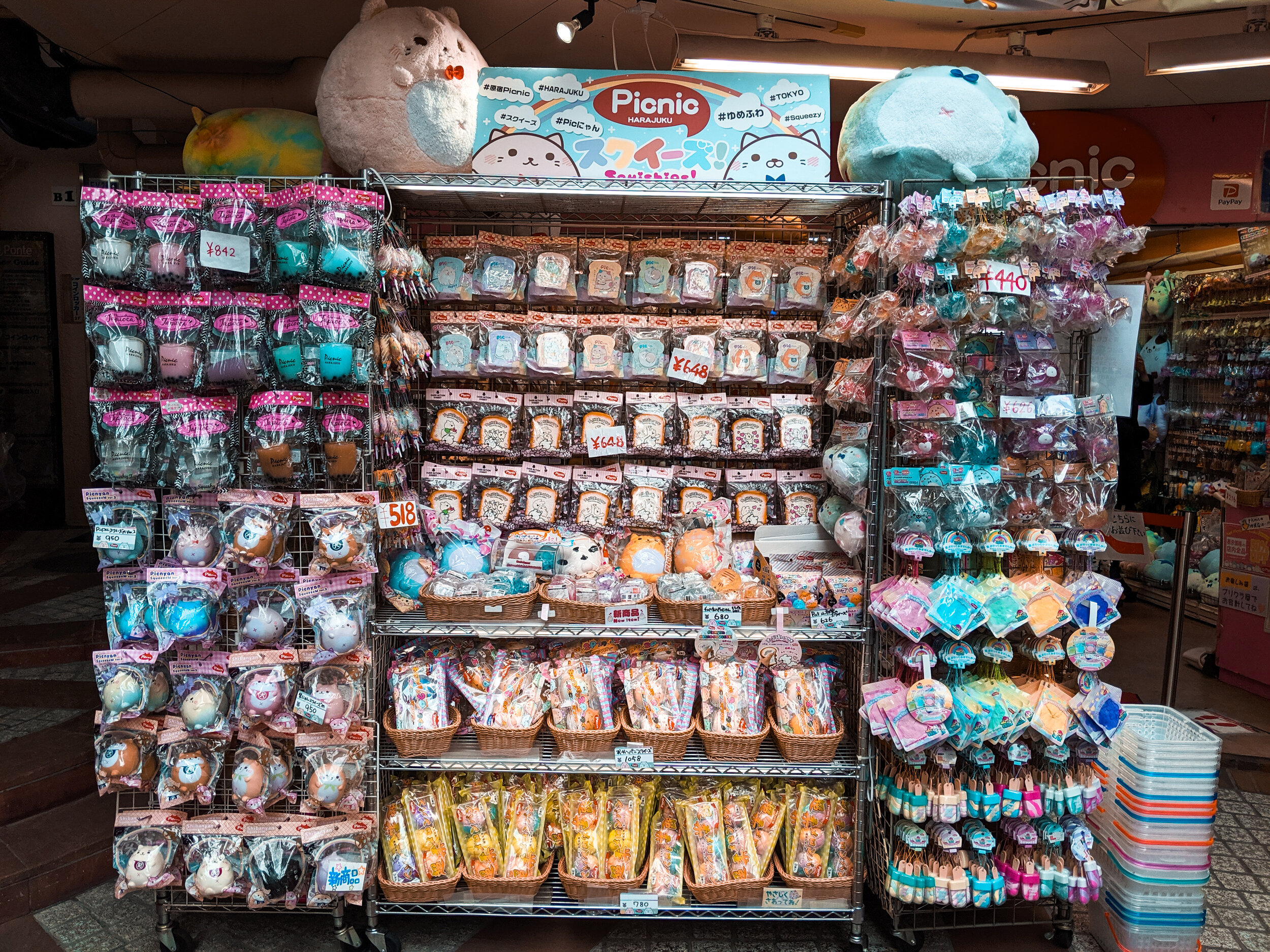
If you are looking for things to do in Tokyo Japan, just take a stroll down Harajuku where you can find squishy toys. A recent boom in squishy toys which started in Japan have become popular all around the world. Thanks to social media platforms such as YouTube, these squishy toys have become insanely popular among teenage girls and recently adults. When you squeeze these toys, they condense and take a few seconds to come back to its original form. The unique feel to these toys have even become a stress reliever for some customers!

Known as “squeeze” in Japan, these toys comes in all different sizes and shapes. Some of the popular ones are in the shape of toast! Many of them are also scented as how they would smell. So, strawberry toast squishes would smell like strawberries.

Picnic in Harajuku sells all sorts of squishy toys. They have squish toys in shapes as toast, drinks, bottles, cute animal characters and more. Located right off of Takeshita Street near Harajuku Station, its a shop where you can get affordable squish toys!

Location:

1 Chome-14-2 Jingumae, Shibuya City, Tokyo 150-0001

Tokyo Guide: A rack of squishy toys in Harajuku.

Tokyo Guide: A rack of squishy toys in Harajuku.

#tokyofoodtour #greentea #matcha #japanesegreentea #japantour #tokyotour #instagood #getinmybelly #photooftheday #instacool #tokyo #hellotokyotours #ilovetokyo #hellotyo #streetsoftokyo #visittokyo #foodie #foodtour #preciousmemories #familytravel #thingstodointokyojapan #tokyoguide #kamiyabar #tokyofoodtour #thingstodointokyojapan #tokyofoodtour #japanesefood #harajuku #squishytoys

Laura Blackhall
YOKOHAMA TOUR | VISIT YOKOHAMA CHINATOWNS OLDEST TEMPLE

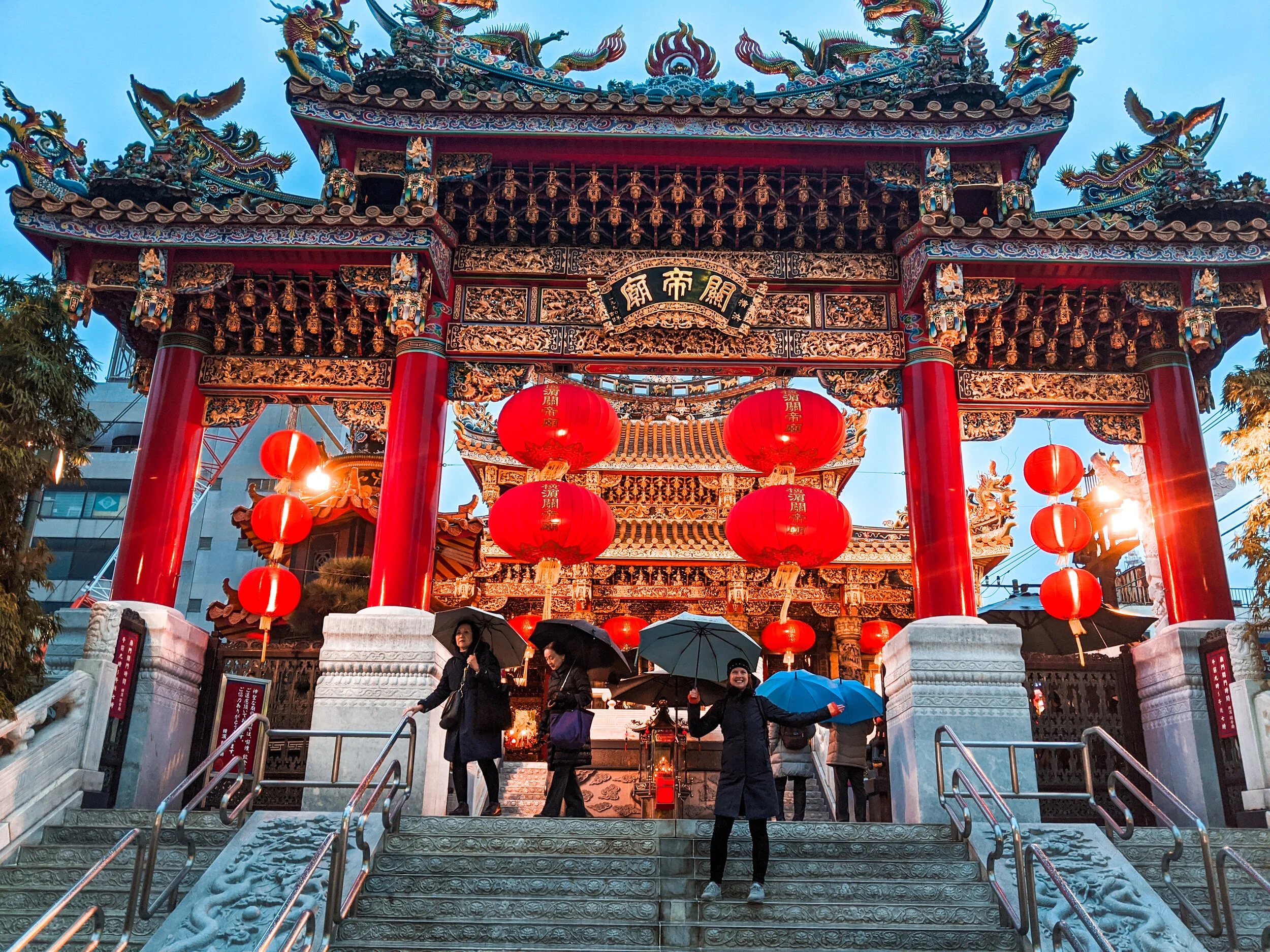
Yokohama Chinatown - or Motomachi Chukagai in Japanese is the biggest Chinatown in Japan. Located just a 5 minute walk from Motomachi Chukagai Station on the Minato Mirai Line, you don’t want to miss out on Chinatown on your Yokohama tour. In the 1850s/1860s, when Japan opened up its country after hundreds of years of seclusion during the edo period (1603-1868), many foreigners began settling in Japan. Foreigners were designated to live in certain places: Westerners on Yamate Hill and the Chinese in Motomachi Chukagai.

When the Chinese began setting up in the area, they also brought along with them their religion. According to legend, a local migrant brought a statue of Guan Yu, the most famous general from The History of Three Kingdoms and set up the Kanteibyo Temple for him in 1871. The Chinese respect Guan Yu for his integrity, steadfastness and leadership. He is often recognized as the Guardian God of the nation and God of Commerce and Wealth.

The temple has been destroyed several times from fires and earthquakes, so it’s not the original temple from 1871 but rather a resurrection of it in 1990, but the temple grounds has been there since.

Location:

140 Yamashitacho, Naka Ward, Yokohama, Kanagawa 231-0023

Yokohama tour: Tokyo Guide Laura in front of Kanteibyo temple in Yokohama Chinatown.

Yokohama tour: Tokyo Guide Laura in front of Kanteibyo temple in Yokohama Chinatown.

#tokyofoodtour #greentea #matcha #japanesegreentea #japantour #tokyotour #instagood #getinmybelly #photooftheday #instacool #tokyo #hellotokyotours #ilovetokyo #hellotyo #streetsoftokyo #visittokyo #foodie #foodtour #preciousmemories #familytravel #thingstodointokyojapan #tokyoguide #kamiyabar #tokyofoodtour #thingstodointokyojapan #tokyofoodtour #japanesefood #shibuyabar #yokohamachinatown #yokohama

Laura Blackhall
TOKYO GUIDE | EBISU DAGASHI BAR IN SHIBUYA

Recently in Tokyo, dagashi bars have been popping all over the city. With just an entry fee of 500 Yen plus one drink order per person, you can enjoy some dagashi snacks to go with your alcoholic beverage. Dagashi - literally meaning cheap or low quality snacks, are basically an equivalent to the penny candy - cheap snacks and candy. Dagashi are traditionally priced at anywhere from 10-50 Yen, but at dagashi bars, all the snacks laid out around the store are free to take, and as much as you want! The stores are themed in a post war Showa era bar - a common association between dagashi and post war Japan.

Dagashi has been around since the edo period (1603-1868), but the modern, popular form took shape post war Showa Period from the 1950s-1980s. Many dagashi stores began popping up and started selling small snacks that could be bought with pocket change - a budget that small children would have through allowance. These stores became an after school hangout for school children where they can purchase small, cheap snacks. Many of the dagashi are packaged in bright, childish wrappings that often includes a prize or toy. Some are even themed with popular TV show characters or famous athletes - a child’s sports hero.

Dagashi Stores are not too common anymore as many have been turned into convenience stores now, but you can still enjoy dagashi at the Ebisu Dagashi Bar in Shibuya. If you want unique things to do in Tokyo, Japan then this bar is definitely a go to! Just a 5 minute walk from Ebisu Station, you will feel as if you are back in the 1960s as a Japanese child.

Location:

150-0021 Tokyo, Shibuya City, 13, 恵比寿西1−13−7

Tokyo Guide: The Ebisu Dagashi Bar in Shibuya themed in a Showa Era styled building.

Tokyo Guide: The Ebisu Dagashi Bar in Shibuya themed in a Showa Era styled building.

#tokyofoodtour #greentea #matcha #japanesegreentea #japantour #tokyotour #instagood #getinmybelly #photooftheday #instacool #tokyo #hellotokyotours #ilovetokyo #hellotyo #streetsoftokyo #visittokyo #foodie #foodtour #preciousmemories #familytravel #thingstodointokyojapan #tokyoguide #kamiyabar #tokyofoodtour #thingstodointokyojapan #tokyofoodtour #japanesefood #shibuyabar #barsinshibuya #dagashibar

Laura Blackhall
TOKYO FOOD TOURS | LEARN ABOUT THE FRUITS SANDWICH

Whether it’s PB&J or ham and cheese, you’ve definitely had a sandwich before. But have you had a fruits sandwich before? If you’re booking a food tour with us, you’ll have the chance to indulge in one of Japan’s favorite sweets - the fruits sando as it’s known here. There’s a lot of different kinds of fruit sandwiches, but your guide will help you pick out the best flavor.

The origin of the fruits sandwich are not exactly clear, and its thought to have been invented in either cafes in Kyoto during the 1920s or by Senbikiya, Japan’s first fruits parlor shop in Tokyo. Some other interesting theories are that it was invented for geisha workers to eat fruits without getting their hands sticky and dirty. It’s also thought to have been invented as a cheap way to enjoy fruits and cake, two luxury items during the early-mid 19th century in Japan because it uses small slices of fruits and replicates the taste of cakes by being sandwiches by two pieces of bread. There are many interesting theories, but all we know is that Japan invented these wonderful sweet and savory snacks.

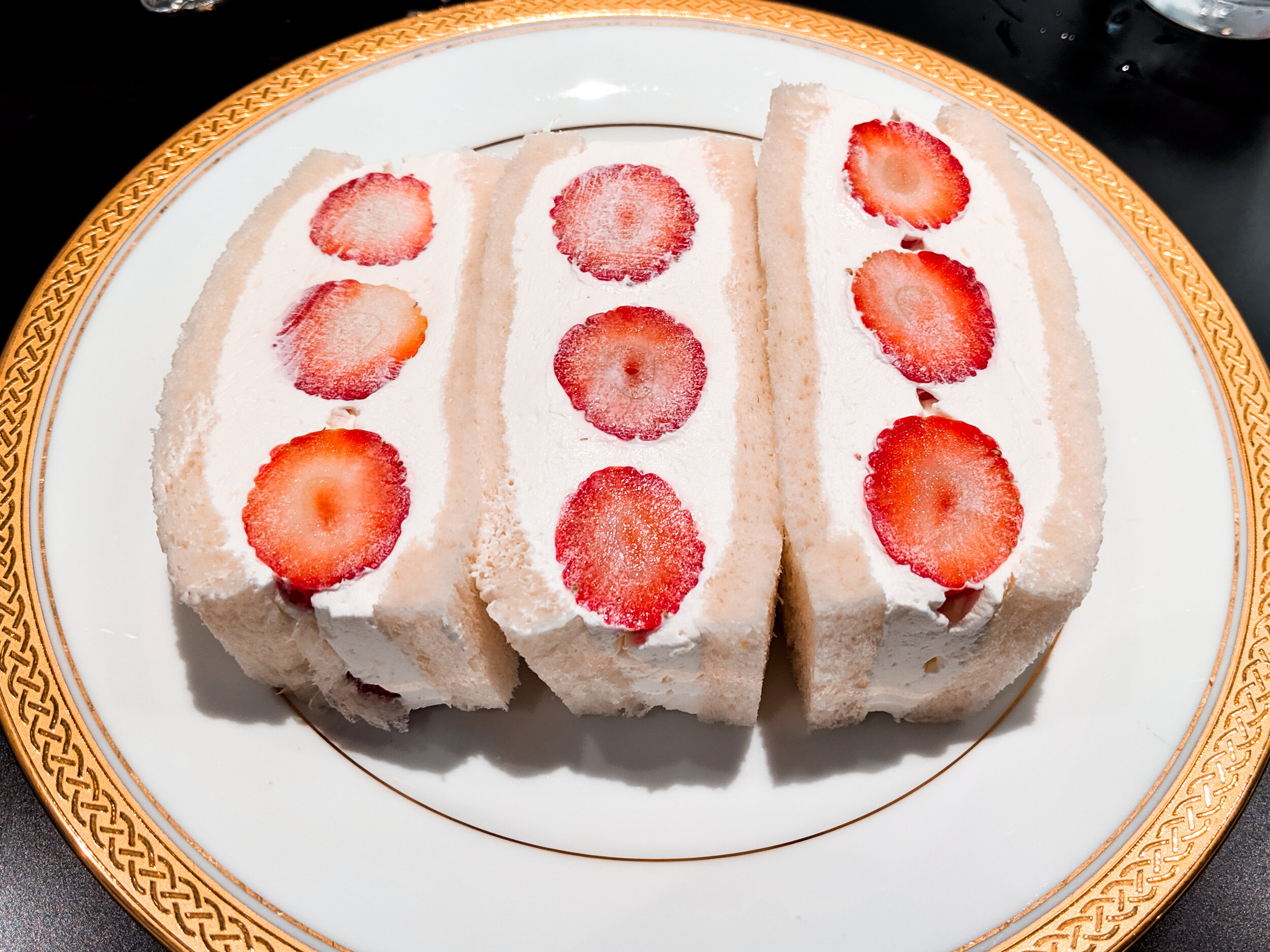
A fruits sandwich is literally a sandwich with whipped cream and your choice of fruits inside. Soft white bread with the ears cut off are used to sandwich the whip cream that’s not too sweet (so it doesn’t mask the flavor of the fruit) and sliced fruits. They taste a bit like cake, but not too overwhelming. The softness of the bread and the not-too-sweet whip cream mixed with Japan’s fresh fruits makes this nice, wholesome snack. Because they are so popular, they’re sold just about anywhere you go. Cafe’s and fruit parlors will have high quality fruits sandwiches that can be priced anywhere from 1000-2000 Yen! (10-20 USD). If you’re looking for something a bit cheaper and quick, any convenience stores will sell them (7-eleven, Lawson, Family Mart) which are literally on every block in Japan.

Some common fruits sandwiches are strawberry, kiwi, mango or banana. Not many juicy fruits like citruses and berries are used because the liquid from the fruit might make the bread soggy, but rather more solid fruits are a popular choice. The most common one is probably the strawberry fruits sandwich. Because it’s so common, it’s sometimes referred to as just ichigo sando, or strawberry sandwich.

Making these at home can be easy, but deciding on the right kind of bread and making sure that the whip cream isn’t too sweet would become the game changer.

By joining us on a Tokyo food tour, you can try some delicious fruits sandwiches!

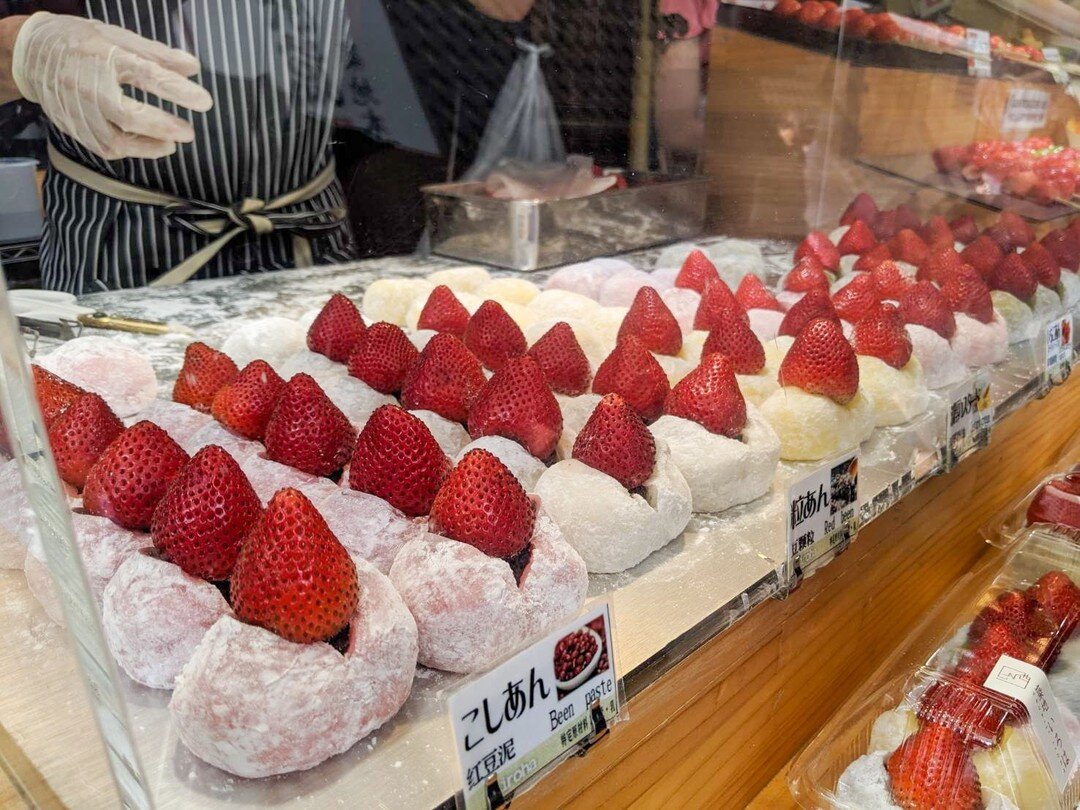
Tokyo Food Tours: Winter in Japan means strawberry season. Many shops will have delicious strawberry sandwiches as their winter specialty!

Tokyo Food Tours: Winter in Japan means strawberry season. Many shops will have delicious strawberry sandwiches as their winter specialty!

#tokyofoodtour #greentea #matcha #japanesegreentea #japantour #tokyotour #instagood #getinmybelly #photooftheday #instacool #tokyo #hellotokyotours #ilovetokyo #hellotyo #streetsoftokyo #visittokyo #foodie #foodtour #preciousmemories #familytravel #thingstodointokyojapan #tokyoguide #kamiyabar #tokyofoodtour #thingstodointokyojapan #tokyofoodtour #japanesefood #fruitssandwich #japanesefruits

Laura Blackhall
TOKYO DAY TOURS | VISIT TSUKIJI FISH MARKET

Ever wanted to eat sushi for breakfast? Sounds crazy right? Well Tsukiji Fish Market is opened at 5:00 AM to satisfy your needs. Taste the fresh seafood with us. The seafood comes straight from the Toyosu FIsh Market from that mornings catch. While it’s a maze in there, you needn’t worry because our Tokyo Tour Guides can help you find the best place to enjoy some mouth watering seafood.

Be careful though, if you don’t have a guide - most of the stores close by noonish. So, it’s best to visit in the morning with your guide. Matthew, from Pennsylvania, who has never been to Japan and was here on a business trip joined us at 9 am on a 4 hour private tour so that he can enjoy the morning bustle at the fish market. Two thumbs up from Matthew!

Tokyo Day Tours: Matthew visiting Japan on a business trip enjoyed the the fresh caught tuna at Tsukiji Fish Market.

Tokyo Day Tours: Matthew visiting Japan on a business trip enjoyed the the fresh caught tuna at Tsukiji Fish Market.

#tokyofoodtour #greentea #matcha #japanesegreentea #japantour #tokyotour #instagood #getinmybelly #photooftheday #instacool #tokyo #hellotokyotours #ilovetokyo #hellotyo #streetsoftokyo #visittokyo #foodie #foodtour #preciousmemories #familytravel #thingstodointokyojapan #tokyoguide #kamiyabar #tokyofoodtour #thingstodointokyojapan #tokyofoodtour #japanesefood #tsukijifishmarket #sushi

Laura Blackhall
TOURS BY LOCALS TOKYO | OUR TEAM

We offer tours in English in Tokyo, but what makes it special is our team of guides are Japanese natives and locals who are fluent in both Japanese and English. Our carefully trained team have the knowledge and skills to give you a great tour in Japan! Our guides and tours have received 5 star reviews on experiences and we plan on giving more.

We offer a variety of tours to choose from. We have a Journey Through Time Through Food Tour where we eat foods associated with different time periods. We go through the past, present and future. We also have private customized tours where you send us your interests and must see places and we guide you through the city based on your interests. If you are more interested in history, you can come on the Yokohama History Tour where we learn about the history of Yokohama through the eyes of immigrants in the late 1800s/early 1900s. Come join us on a 5 star tour experience!

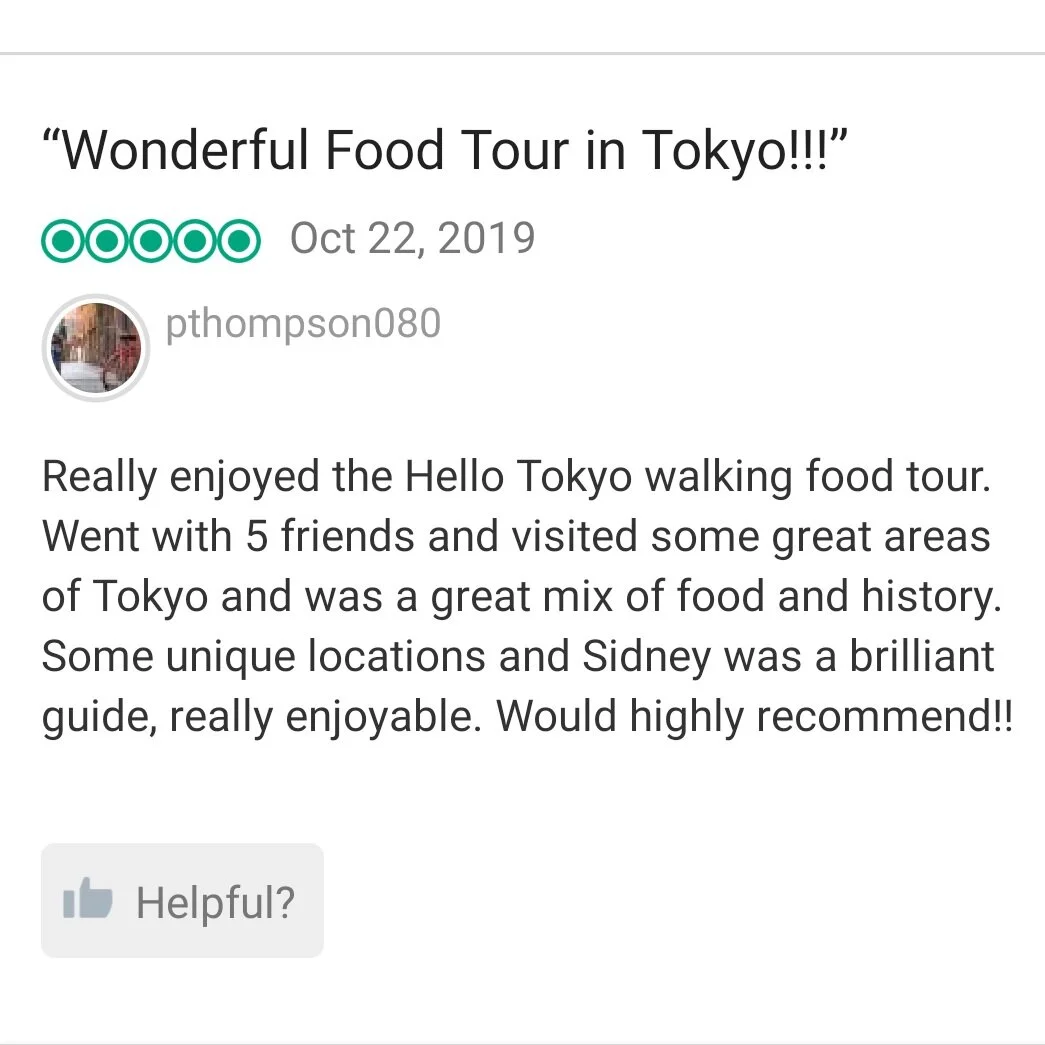
Tokyo Guide: TripAdvisor review

Tokyo Guide: TripAdvisor review

Tokyo Guide: TripAdvisor review

Tokyo Guide: TripAdvisor review

#tokyofoodtour #greentea #matcha #japanesegreentea #japantour #tokyotour #instagood #getinmybelly #photooftheday #instacool #tokyo #hellotokyotours #ilovetokyo #hellotyo #streetsoftokyo #visittokyo #foodie #foodtour #preciousmemories #familytravel #thingstodointokyojapan #tokyoguide #kamiyabar #tokyofoodtour #thingstodointokyojapan #tokyofoodtour #japanesefans

Laura Blackhall